
Health professionals call for TfL-wide ban on polluting ads
Today, an open letter calling for a TfL-wide end to adverts promoting fossil fuels and other health- and climate-harming products has been delivered to London Mayor, Sadiq Khan.
Signed by frontline health workers and leading public health experts, the letter warns that London is “acting as a billboard for polluting products” like fossil fuels, SUVs, airlines and wood-burning stoves, which worsen air pollution and the climate crisis.
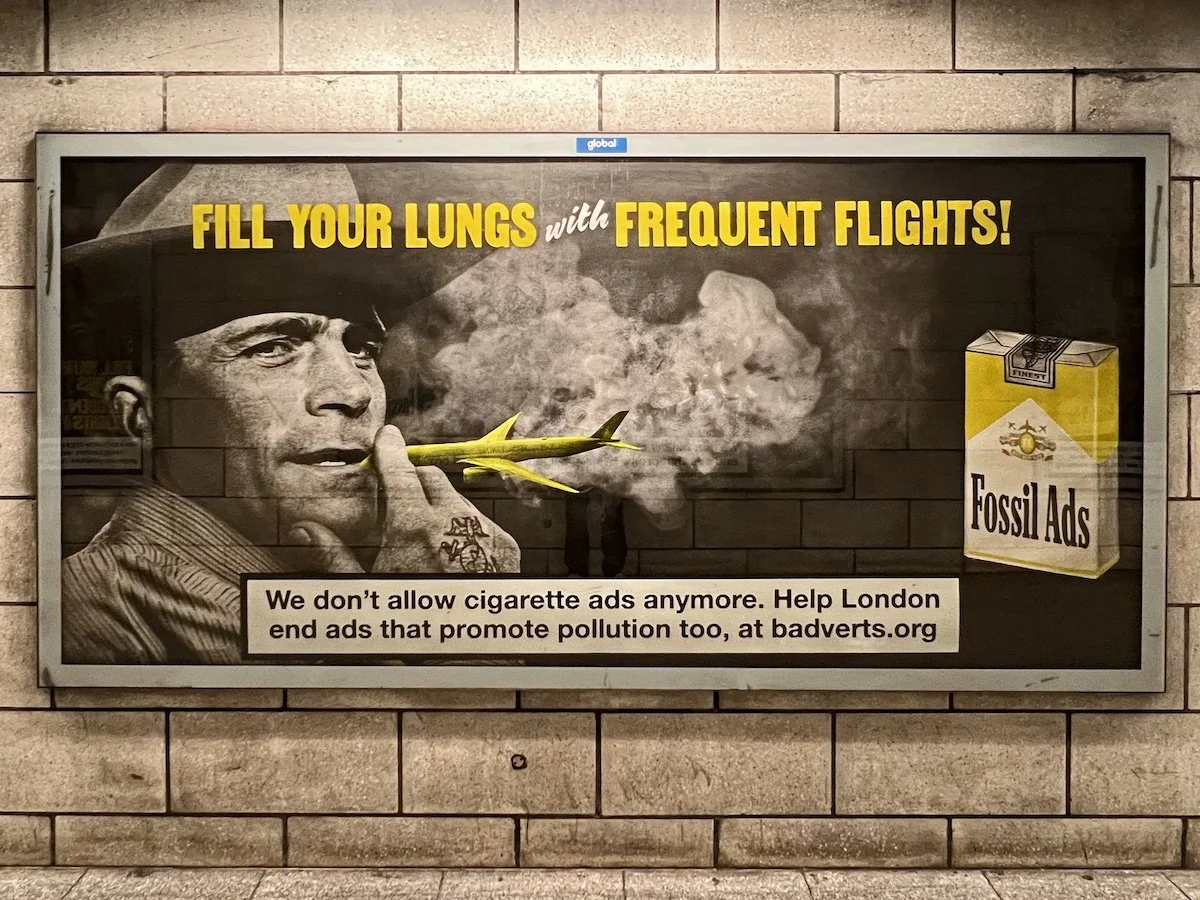
Satirical tobacco warning ad takeover in Southwark tube station, 2025. Credit: Badvertising. Artwork: Matt Bonner.
Advertisements for these products are commonplace across TfL, which is one of the largest ad estates in the world. These ads, potentially seen by millions of passengers each day, risk normalising polluting industries, promoting sales of polluting products, platforming greenwash and undermining London’s policies on clean air and climate action.
Advertising can also influence policymakers - the open letter points to evidence that fossil fuel companies like Shell and BP have repeatedly bought out all the ad space in Westminster and St. James’ Park tube stations, near to UK parliament, risking the manipulation of key policy decisions.
This summer NHS workers have reported intense strain on their services, with unprecedented numbers of people becoming unwell owing to extreme heat. Five intense heatwaves saw record numbers of A&E admissions, ambulance call-outs and calls to 111, the NHS helpline.
Professor Hugh Montgomery OBE, Professor of Intensive Care Medicine at University College London, who signed the letter said: "Encouraging life-threatening behaviour through advertising is, rightly, not allowed. As hospitals were overwhelmed, the summer heatwaves made London literally unliveable for some. London's foundations are also, very literally, collapsing as desiccating clay causes subsidence. Just as we did for tobacco products in order to save lives, promoting fossil fuel use should now be banned."
Professor Kate E Pickett OBE, Professor for the Public Understanding of Social Science at the University of York and Academic Director of Health Equity North, and another signatory said: “People living and working in busy cities like London are doubly vulnerable to the health impacts of burning fossil fuels. The air pollution from constant traffic fills their lungs and the extreme weather caused by global heating is intensified by the urban environment, preying especially on the most vulnerable. Allowing adverts that actively promote pollution on Transport for London - whether for fossil fuel companies, airlines or big SUVs - is an act of societal self harm. By ending these ads Sadiq Khan can defend London's health and make the city a better place to live."
Doctors, health workers and public health institutions in Canada, Australia and the UK have called for an end to advertisements for fossil fuels and other highly polluting products. Meanwhile, more than 30 health organizations representing 12 million health workers and professionals globally have pledged to refuse to work with advertising agencies that have fossil fuel clients.
Advertising and sponsorship bans have successfully improved health outcomes. For example, the UK ban on tobacco marketing reduced both smoking and risk of smoking uptake. The open letter references the ban on junk food advertising across TfL, introduced by Sadiq Khan. Following the ban, household purchasing of unhealthy food and drink was lower, with the policy expected to save the NHS an estimated £200 million through the prevention of illnesses such as diabetes.
Sadiq Khan has pledged to review Transport for London’s advertising policy while urging national government to provide guidance on how to define high carbon advertising.
Academics at the University of the West of England (UWE) have provided a high carbon advertising definition framework for TfL, road-tested by marketing specialists, which is supported by the signatories of the open letter.
A Low Carbon Advertising Policy on TfL would affect millions of passengers, helping to break the influence of polluting companies and sectors, making space for low carbon behaviours and sectors. Badvertising is calling for London to follow cities including Edinburgh, Sheffield and Portsmouth and ban advertisements that promote pollution.
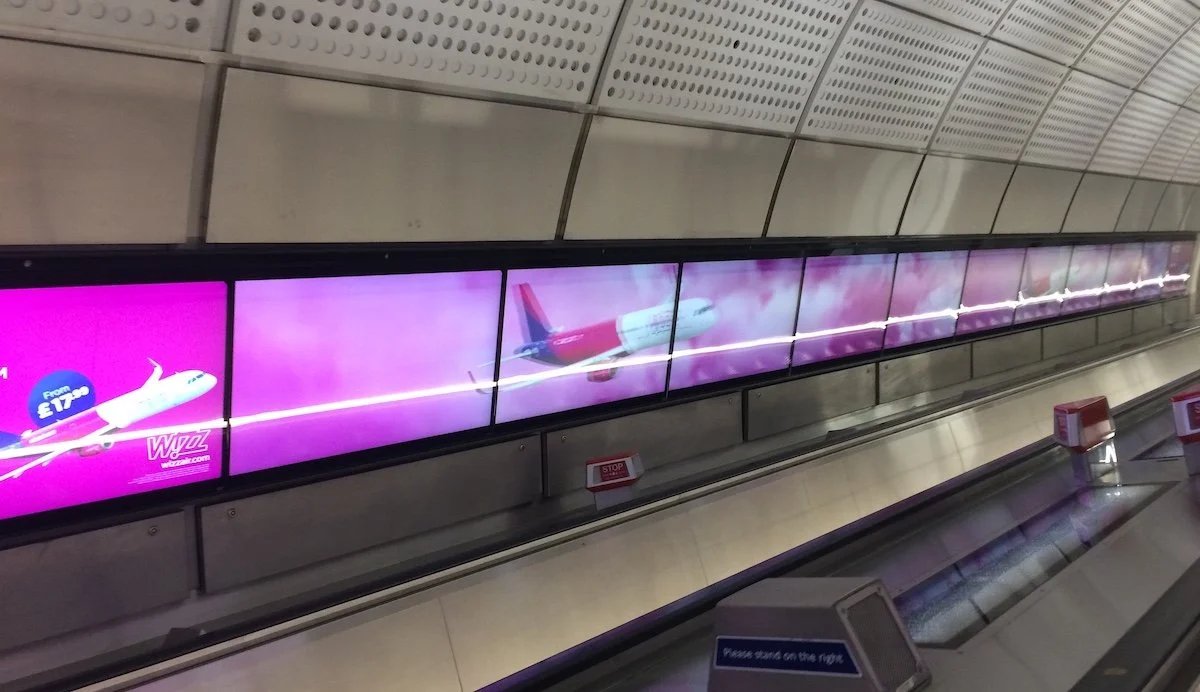
Airilne advert on London’s tube network, 2025. Credit: Badvertising.