
Are adverts making us sick?
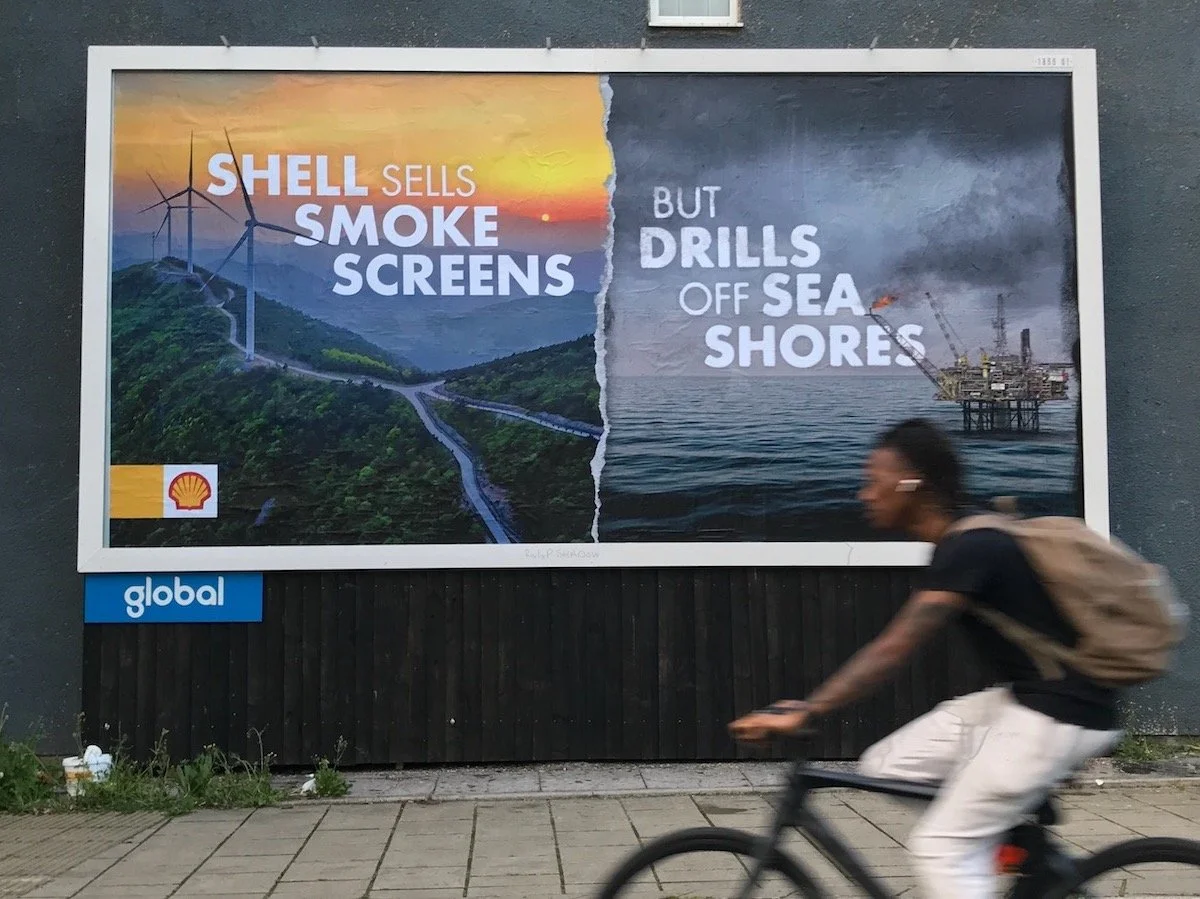
Artwork by Matt Bonner. Image credit: Brandalism.
How do adverts for fossil fuel companies, SUVs, airlines and airports affect our health? In our latest briefing, Are adverts making us sick?, we explore the public health case for UK-wide curbs on the promotion of the planet’s most polluting sectors.
Fossil fuels are the new tobacco
Just as tobacco companies used public relations to sell their lethal product, fossil fuel companies and their dependent industrial sectors use similar marketing tactics to keep us locked into a deadly fossil fuel economy, one that is harming our health and leading to millions of premature deaths every year.
Rugged ads for SUVS navigating forests and rivers, stunning photography of far-flung destinations in airline ads and government-funded ads promoting British meat tap into our core values to sell us these products, while concealing their impact on health and the environment.
Carefully targeted campaigns have exploited the cost of living crisis to promote biomass burning to politicians and local residents, while advertising agencies have hired influencers to promote fossil fuels to children as young as seven.
Are adverts making us sick? includes five illustrative case studies of polluter marketing and its risks to health: fossil fuel companies, aviation, SUVs, industrial meat and dairy, and Drax Power Station.
Health workers back calls to ban fossil ads
Companies contributing the most to health harms caused by air pollution and climate breakdown pay billions for advertising, sponsorships and PR to appeal to consumers, reach broad audiences, spread disinformation and false climate solutions, distance their brand from the reality of their harmful impacts and avoid legislation to curb their operations. Fossil fuel companies in particular have used many of the tricks from the tobacco industry’s marketing toolkit.
In response, doctors, health professionals and health institutions in Australia, Canada and the UK have called for an end to the promotion of fossil fuels and other polluting sectors.
Controls on advertising have previously led to positive health changes such as healthier eating and reduced uptake of smoking, saving many lives. The introduction of curbs on unhealthy food advertising across London’s public transport network, TfL, reduced household purchasing of these items and is expected to save the NHS an estimated £200 million, providing an inspiring precedent.
Recommendations
In this briefing we add to calls for more empirical evidence regarding the impacts of fossil fuel marketing on health. We also call for an immediate, common-sense approach to end the influence of polluting ads by the UK national government, local councils, health professionals and unions, using the valuable precedents of curbs on tobacco and unhealthy food marketing.

Protestors call for advertising agencies to drop fossil fuel clients, 2023. Credit: Angela Christofilou.
Thank you for your interest in Badvertising. If you would like to support our work to end the health harms caused by polluter advertising, please get in touch, and you can join our newsletter and follow us on socials for updates.