
Bristol bans ads for fossil fuels, SUVs and ultra-fast fashion
Bristol City Council has become the latest UK city to take action against ads promoting polluting products. The move bans adverts including those for SUVs, fossil fuels, airlines and cruises, on council-owned ad sites, with councillors citing a “moral argument” for doing so. The city is also the first in the UK to ban adverts promoting ultra-fast fashion, because of the harms it causes to workers and the environment. (BBC, Bristol 247)
“Our Green-led council is making huge strides on Bristol’s climate and sustainability commitments, working on public transport infrastructure, home heating and community energy. It makes no sense for these efforts to be running alongside advertisements for things like oil and gas companies, SUVs or fast fashion which do not align with our community values.” Carla Denyer, MP
Bristol is riding a UK wave: more than 20 UK councils, including Sheffield, Cardiff, Edinburgh and Portsmouth, have now introduced curbs on ads for climate-harming products. Badvertising is calling for local ad bans to be scaled up to national policy.
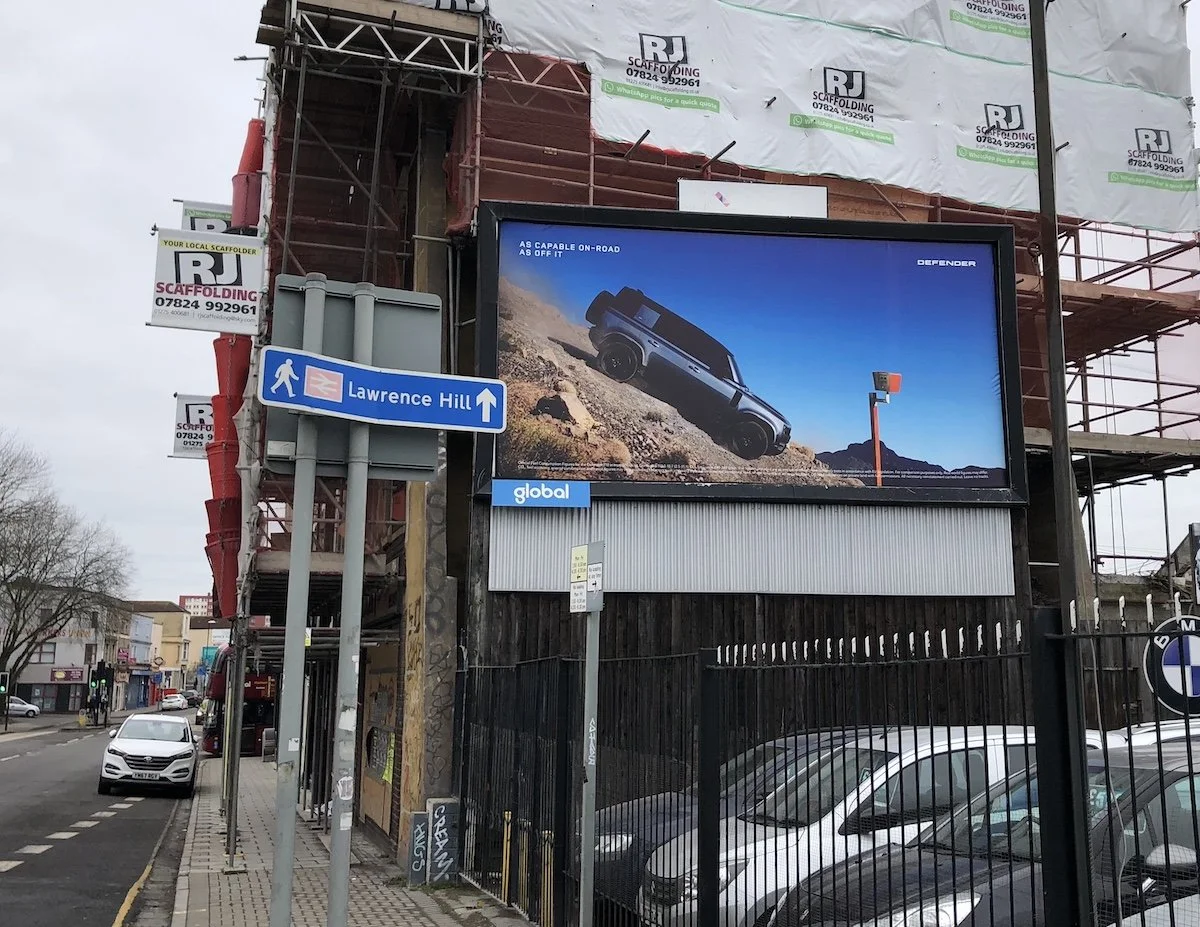
An SUV advert in a congested area in Bristol, 2024. Credit: Adfree Cities.
Nicola Wilks, Co-Director at Adfree Cities, which is part of the Badvertising project, said: “We know ad bans are a catalyst for healthy change. Removing tobacco ads saved lives by reducing levels of smoking. As a Bristol resident who cares deeply about climate change and air pollution, I am proud that Bristol has gone even further than other UK councils in curbing polluting ads; it feels like common sense.
"Now we need to scale up bold local action to national tobacco-style bans on polluter advertising, to break the toxic influence of polluting companies, and support meaningful action for climate and clean air.”
Speaking in the council meeting in which the policy was passed, Deputy Leader of Bristol City Council, Councillor Heather Mack said: "Advertising is basically the art of manipulation… and it forces itself upon all of us all of the time, and we all know the impact that has on our wellbeing and mental health. It is unsurprising that the most extractive and damaging industries are able to spend the most.”
Carla Denyer, MP for Bristol Central, worked on the pioneering earlier ad ban for junk food and other harmful products in Bristol, before she became an MP. As a councillor she worked with Adfree Cities to push for this initial ad ban to include high carbon products and services too, but this was rejected at the time.
Commenting on the new policy, MP Denyer said: “I am so pleased that the council has taken this much-needed next step and added high-carbon products and services to the list of things that will not be advertised on council-owned space. Our Green-led council is making huge strides on Bristol’s climate and sustainability commitments, working on public transport infrastructure, home heating and community energy.
“It makes no sense for these efforts to be running alongside advertisements for things like oil and gas companies, SUVs or fast fashion which do not align with our community values.”
Bristol’s policy strongly cracks down on ads promoting unsustainable modes of transport, with a ban on fossil fuel-powered cars, SUVs, airlines, airports and cruises, all of which typically produce high levels of pollution. However, the promotion of UK-based holidays and more sustainable methods of travel, such as trains, will be encouraged.

British Airways ad-hack in Bristol, 2024. Credit: Brandalism.
Bristol City Council pledged to review the policy in future, specifically in relation to the promotion of climate-harming food owing to the large differences in the environmental and climate impacts of meat and dairy compared to plant-rich diets. Hackney mayor Zoe Garbett has pledged to end advertising for meat and dairy on the council’s ad sites, while several municipalities have taken this step across the Netherlands.
Badvertising is calling for local bans on climate-harming promotions to be scaled up nationally, including online, and across London's public transport network, to help shift social norms towards sustainable ways of living, and reduce the fossil fuel sector's influence on national policymaking.