
What is “high-carbon advertising”? A definition for TfL
This summer activists and commuters alike have compared journeys on London’s tube network to a sauna, as temperatures reached above 34oC. Meanwhile the capital’s beloved green spaces have dried out, with shocking images of parks scorched to yellow-brown as a result of extreme heat and drought, intensified by climate breakdown.
We need to pull all levers to prevent further global heating and adapt to new extremes. Badvertising and our network of campaigns and academics are calling on London Mayor, Sadiq Khan, to end advertisements across London’s transport network that promote and normalise polluting industries, from fossil fuels to airlines and SUVs.
After calls for London to follow cities including Edinburgh, Sheffield and Portsmouth and ban advertisements that promote pollution, Sadiq Khan pledged to review Transport for London’s advertising policy, and urged national government to provide guidance on how to define high carbon advertising. A Low Carbon Advertising Policy on TfL would affect millions of passengers, helping to break the influence of polluting companies and sectors, making space for low carbon behaviours and sectors.
Academics at the University of the West of England (UWE) have now provided a definition framework for TfL. The full research, which was led by Tom Youngman and Katie Allen, is available here. The research summary is included as an extract, below, with kind permission of UWE.
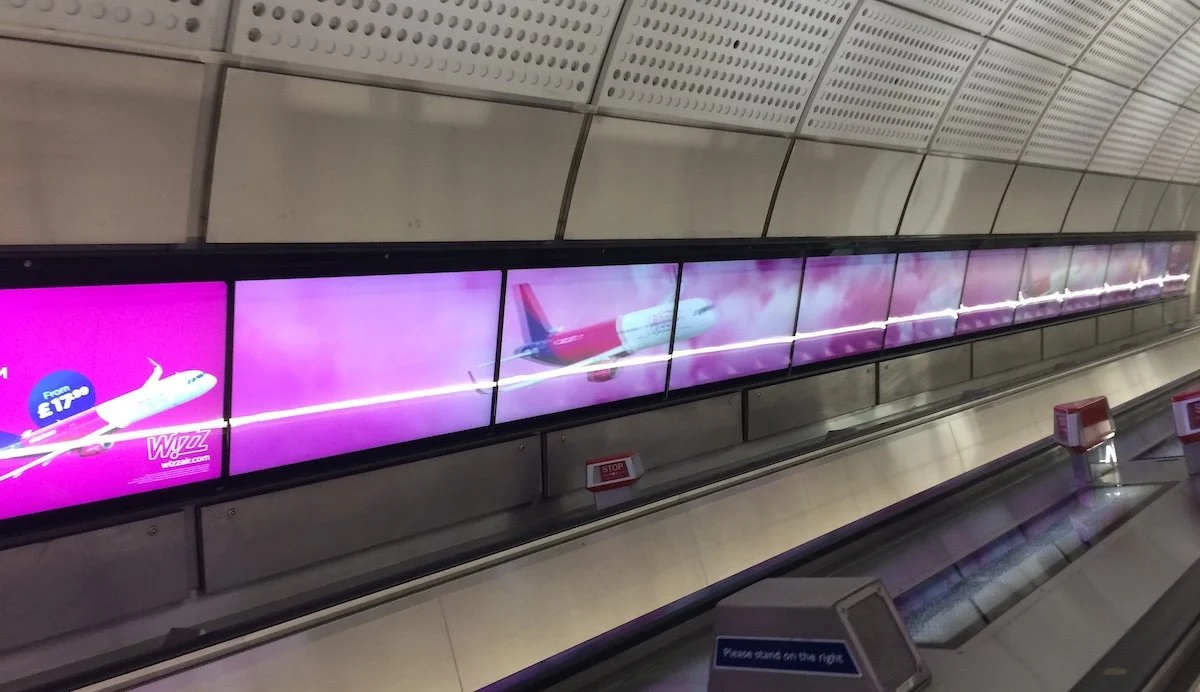
Wizz Air advert on the Elizabeth Line, London.
A high-carbon advertising definition for Transport for London
Authors: Katie Allen, Tom Youngman, Laura McAllister, Stelina Kanaki and Tim Gale, University of the West of England (UWE)
Summary (extract from the full research paper)
“The UK has committed to reach Net Zero greenhouse gas emissions by 2050. The Mayor of London has gone further, aiming to bring the city to Net Zero emissions by 2030. Yet look around on the tube or on bus stops across London and you’ll see adverts encouraging you to buy flights, deforestation-linked foods and petrol cars.
Transport for London (TfL) has the legal power to implement restrictions on high carbon advertising, as does the Mayor of London to direct it to do so, so how should this be implemented in practice? This report aims to fulfil Mayor of London Sadiq Khan’s request for an evidence-based definition.
We consider a longlist of 36 possible definitions, applying systematic screening to reach a shortlist of 5. We appraise those shortlisted definitions on their feasibility to implement and their potential impact on greenhouse gas emissions, as mediated by consumer behaviour, corporate behaviour, policy alignment and environmental values.
Reflecting on our shortlisted definitions, we propose a combination of these definitions as most likely to be effective in contributing to London’s 2030 Net Zero goal:
High carbon advertising shall be defined as any advertisement meeting one or more of the following criteria:
1. Adverts from advertisers operating primarily within a high carbon sector.
2. Adverts for, or depicting, high carbon products or services.
3. Adverts which could be reasonably interpreted as encouraging high carbon behaviours.
We provide a more detailed specification of these criteria and draft lists of what sectors, products and services should be considered ‘high carbon’. Ideally an independent body with relevant scientific capability, such as the Climate Change Committee, should be tasked with creating and regularly updating these lists.
We also highlight governance concerns that must be addressed for TfL to implement this definition successfully. TfL’s Advertising Steering Group was a valuable initiative to improve scrutiny of TfL’s vast advertising estate, but its governance has eroded over time. It urgently needs to open recruitment in a transparent way, following the Governance Code on Public Appointments. It must seek an independent chair and restore the balance of membership to its original ratio of six independent members and two TfL officials. If good governance is restored, the Advertising Steering Group should be given a mandate to make the final call on whether to decline contentious advertisements.”
If you would like to get in touch to find out more about this UWE research, the Badvertising campaign, or how to introduce local Ethical and Low Carbon Advertising Policies in your area, please contact us.