
Reporting on climate breakdown while selling the cause
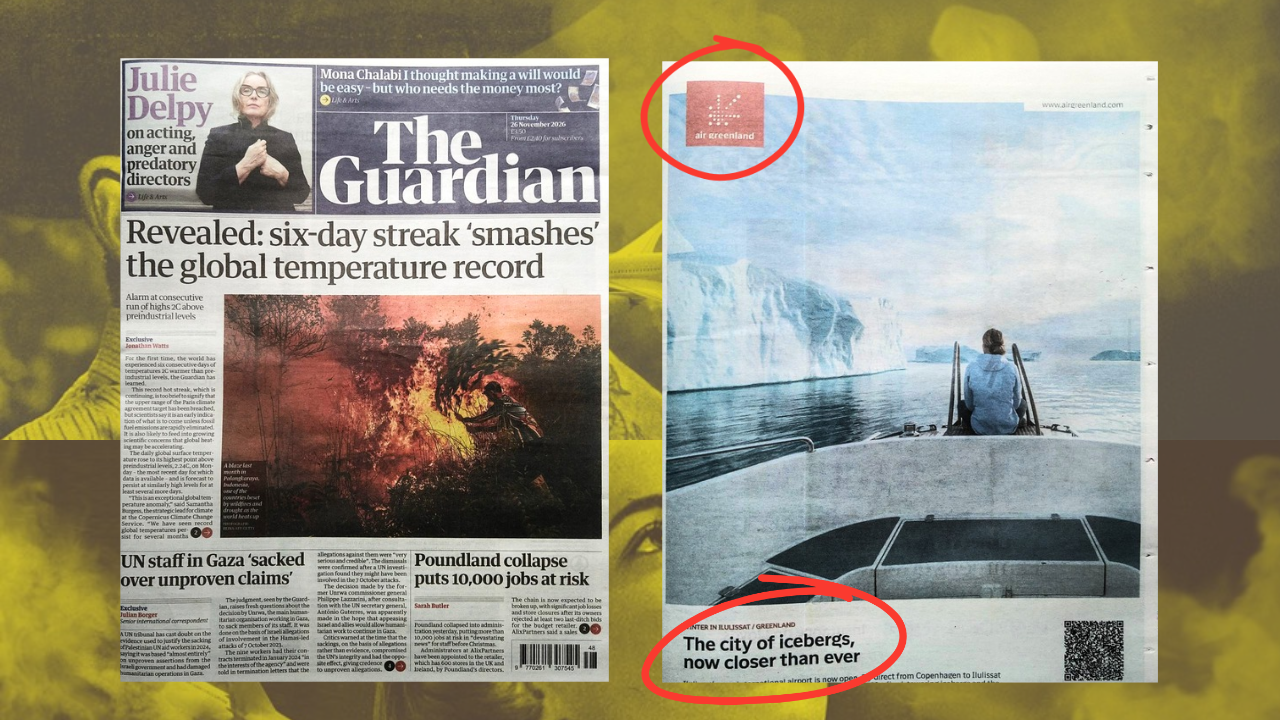
Something doesn’t add-up when two pages of the same newspaper blatantly contradict each other, writes Andrew Simms of the New Weather Institute
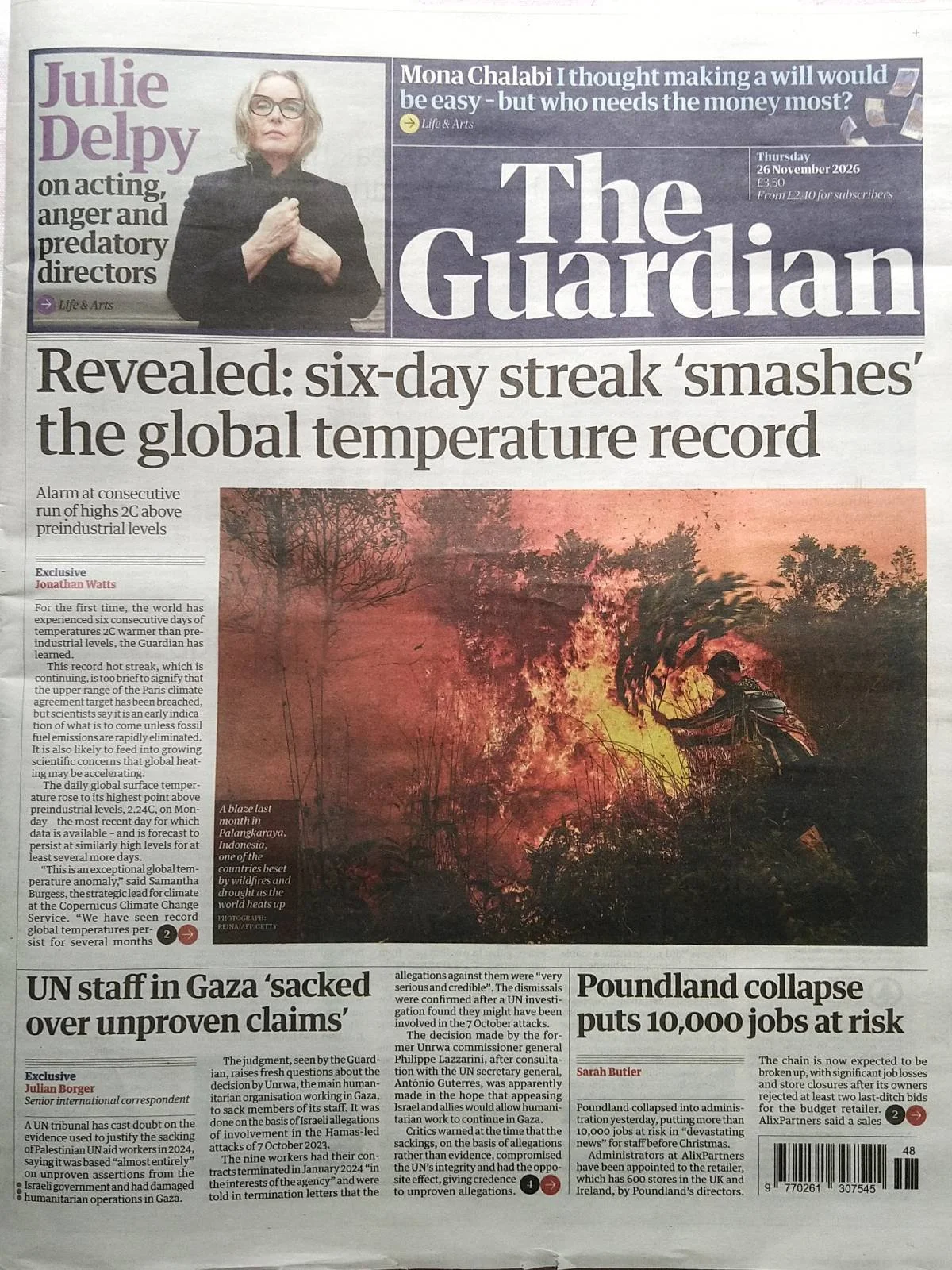
With the ash still settling on international climate talks, diplomatically burned to the ground by fossil fuel interests, news lands of a global heating record being set, with average surface temperatures breaking 2 degrees on six consecutive days.
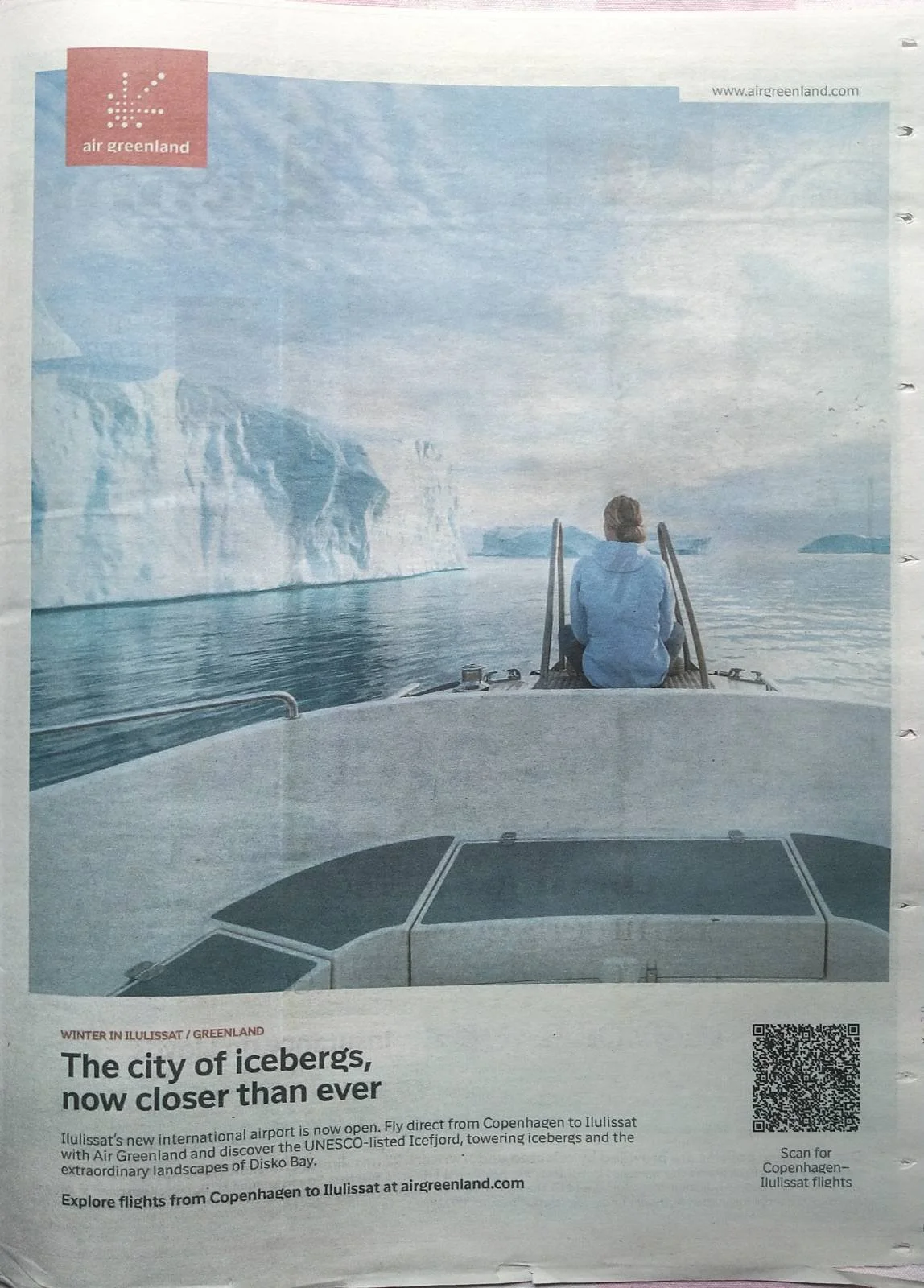
Most of the Guardian newspaper’s front page ran the story with a large photo of a lone man fighting a forest wildfire. Unfortunately, all of the Guardian’s inside back page was covered with an advert for a climate scorching, short-haul airline, a mode of transport often dubbed the ‘fastest way to fry the planet.’
But the irony didn’t stop there. The advert in question was specifically encouraging people to fly to visit ‘towering icebergs’ in Greenland, and the ‘UNESCO-listed Icefjord’.
If anyone is wondering why politicians still refuse to take action equal to what is needed to preserve a climate that can support human civilisation, a big part of the answer is that the opposite, polluting actions, are daily normalised by advertising that promotes heavily polluting products and lifestyles. ‘Fossil fuels, flights, giant SUVs’, nothing to see here, all totally normal, it must be, there are ads for them everywhere.
While nobody expects people to stop flying entirely, driving or using fossil fuels in the near future, one giant question jumps off an unprinted page between the Guardian’s front and inside back page: why on earth are ads still allowed that actively promote climate pollution?
The climate crisis raises many difficult challenges: raising funds to help the most vulnerable adapt, changing energy and transport systems, fixing fossil fuel addicted farming and, of course achieving international agreement on action between highly diverse nations.
In comparison to these, you’d think the least that could be done, the simplest, no-brainer step would be to stop advertising our own self-destruction. Yet where nations before have followed the science on harmful products to bring in, for example, controls on tobacco promotion, they have still to act on pollution fossil fuels that is not only wreaking havoc already on homes, crops and economies, but killing at least as many as tobacco. It’s a different kind of smoke but with even greater consequences.
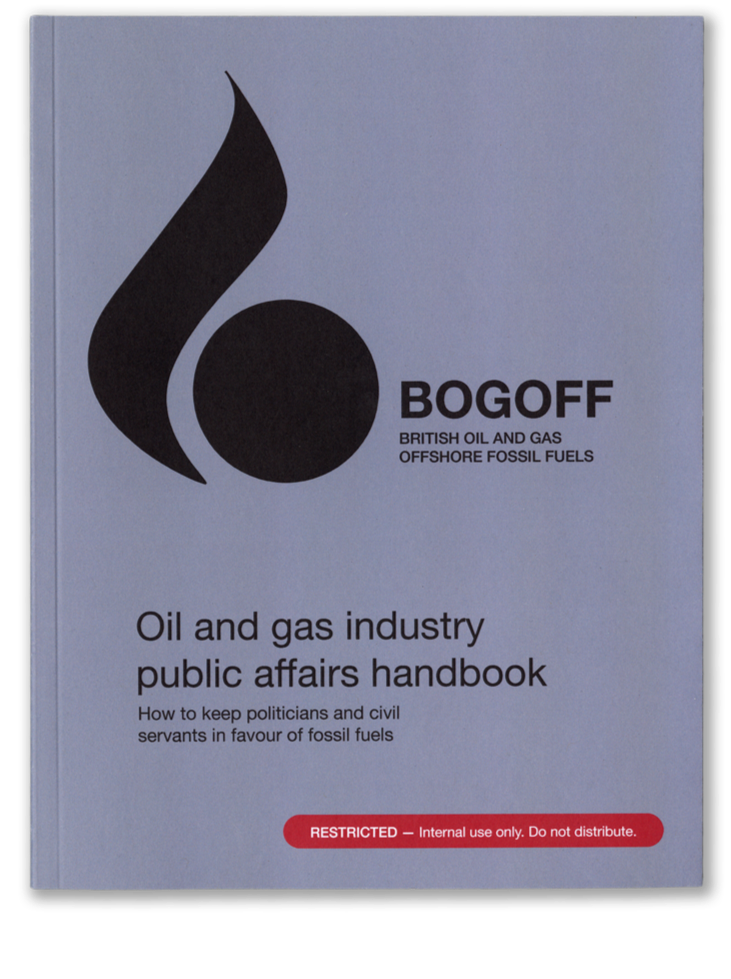
One reason for this is the lobbying power of polluters. The Badvertising campaign, through its Ministry for the Climate Emergency, recently revealed the full scale of how the fossil fuel industry manipulates public and political opinion to keep decision makers onside, and keep burning ever more coal, oil and gas. Many were disappointed, but perhaps fewer surprised, when the UK’s secretary of state for Energy Security and Net Zero, appeared on the BBC television news to defend a government decision over new North Sea oil and gas licences being approved, wearing a jacket emblazoned with a Shell oil company logo
The good news is that, where nations are being too timid to act, a growing list of major cities are seeing the obvious link between their commitments to public health and climate action, and concluding ads promoting climate and air pollution are too big a contraction. In recent weeks cities ranging from Bristol to Helsinki, and Brighton to Copenhagen have introduced fossil fuel ad bans. When tobacco controls were introduced, gaps left were filled with other forms of advertising. And the evidence is that when councils exclude ads for harmful products on sites they control, they do not experience revenue loss.
Think about those icebergs that the full page advert invited you to fly and see. Icebergs are ‘calved’ from glaciers and ice shelves. Due to global heating, caused by human burning of fossil fuels, such as airplane fuel, glaciers are going through a mass extinction event. They are already in rapid retreat and, according to research published in the journal Nature, the rate of glacier loss is projected to hit an astonishing 4,000 per year between around 2041 and 2055. Famously, in Iceland a glacier graveyard has been set up.
The Guardian newspaper has an excellent record reporting on the climate crisis. And the journalists writing about global heating have no direct control over what adverts appear on its pages. The paper is also one of the few, currently, that has a policy against running adverts from fossil fuel companies themselves. Most people’s consumption of fossil fuels, however, happens through things like the mode of transport they choose. Flying carries one of the biggest carbon tickets.
Surely it is untenable for a paper to fulsomely promote on its inside back page, the very thing - climate pollution - that it is warning about on its front page. For a campaigning paper that champions public health and climate action this is the same contradiction currently leading city after city to end ads for heavily climate polluting industries. For credibility, it's time the paper took the same step. And, if they do so, it's likely that, just as with cities, others will follow.
If they don’t, those flights will soon no longer take you to ogle at ‘towering icebergs’, they will just drop you off in a glacier graveyard.