
BOGOFF – EXPOSED!
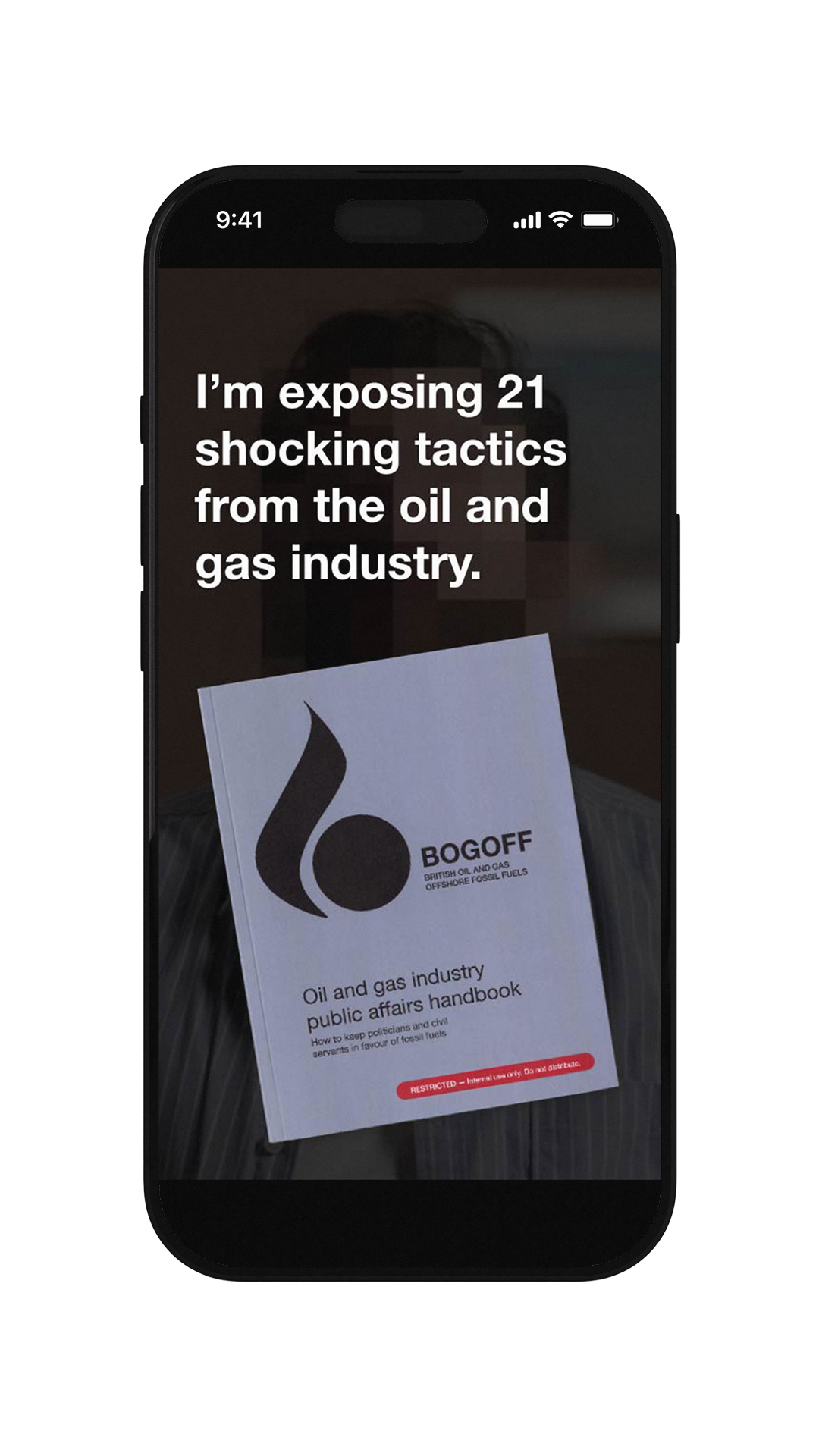
21 shocking tactics from the oil and gas industry they use to keep polluting.
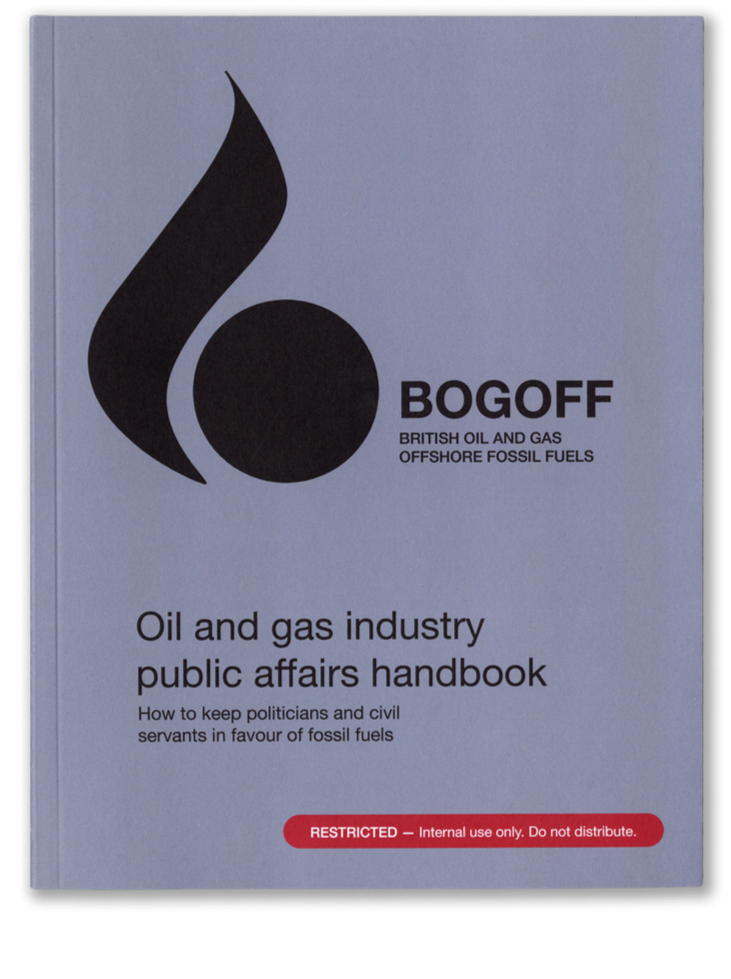
The Ministry for the Climate Emergency brings to your attention attempts we believe are being made to manipulate decision makers and public opinion about in favour of the heavily polluting oil and gas industry.
Information has come into our possession that we consider it our duty and responsibility to share with you, in case, even unknowingly, you have been subjected to this influence.
The methods being used take many forms and may be hard to spot. Some, such as misleading oil and gas industry adverts near Parliament, are hidden in plain sight. Others hide behind front groups, or sponsorship of major sport and cultural events.
In this public affairs handbook we found 21 tactics used by the industry that reveal how it is working to keep burning polluting fossil fuels in spite of the increased scale and cheaper price of renewable energy, and in the face of extreme weather disasters linked to global heating and the high political cost of fossil fuel reliance.
Please share these, and spread the word about the tricks the industry is using to help make them known, and reduce the life-and-death influence they have over our decision makers.




21 shocking tactics in their own words
Here are 21 ways in which the oil and gas industry capture and keep political influence and sway public opinion to keep polluting. It means decisions go their way even if they contradict climate goals, harm public health and the economy, and hold back the transition to clean energy. And, these are just the tricks they ‘admit’ to…

1. Get face time
How We Do It:
Decision makers must see and hear from our industry more than they hear from our opponents – the many others explaining the economic, health and environmental benefits of switching to clean renewables, investing in energy efficiency and reducing demand. Unless we do this politicians and civil servants may develop the view that fossil fuels are the last century’s fuel source. Should this happen, the current policy context which works disproportionately in our favour could turn towards cleaner, cheaper energy choices that will cost our industry dearly.
The good news for us is that we have a great track record of success in gaining access to decision makers and have so far been able to drown out these other voices of reason. Our lobbyists are trained to build personal relationships with decision makers, offering them expert briefings, exclusive industry insights, and reminders of the economic benefits our sector brings to their constituencies.
Our industry’s political influence is built on relentless daily engagement with decision makers. We ensure our representatives meet with politicians and civil servants constantly, normalising our influence and ensuring our priorities always remain top of mind.
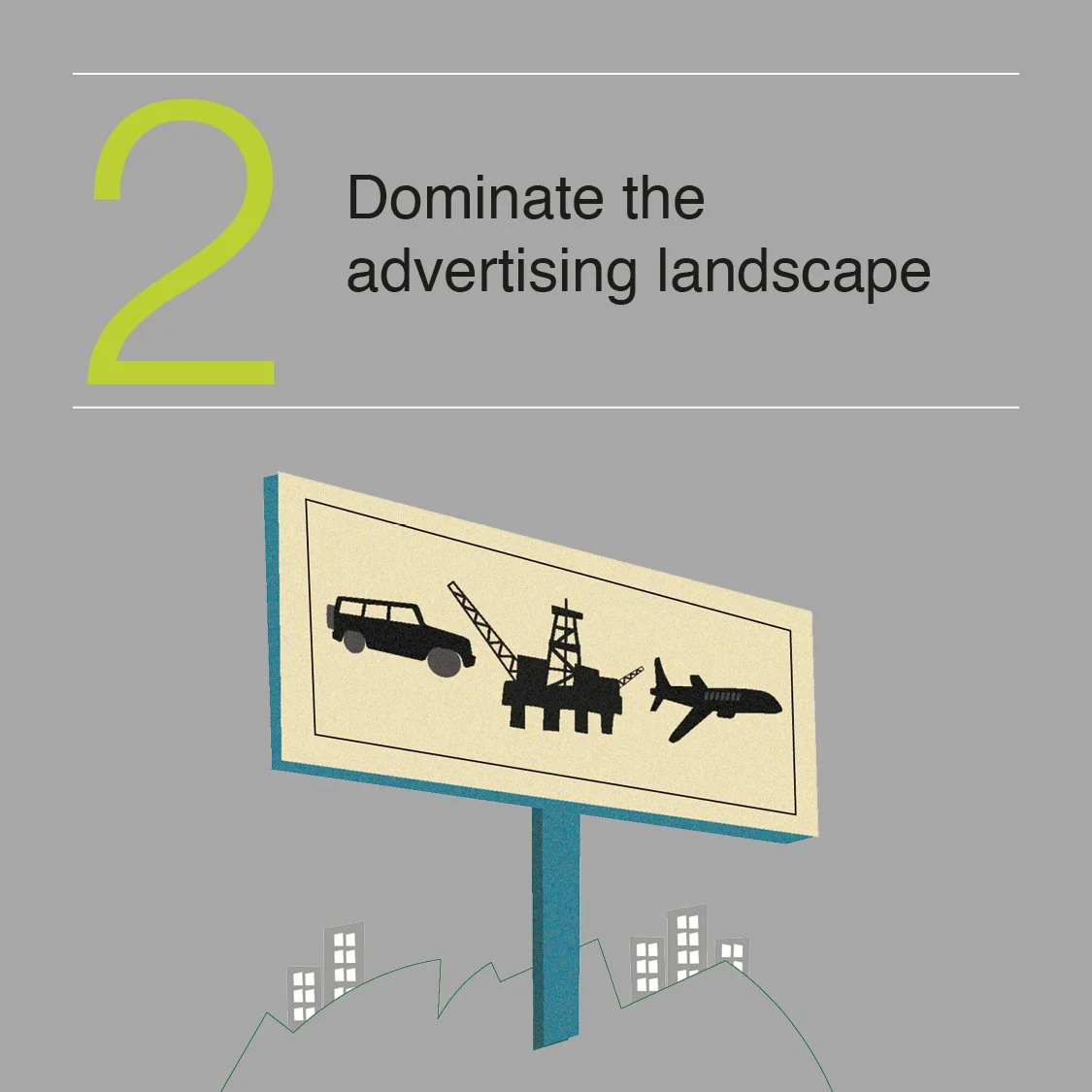
2. Dominate the advertising landscape
How We Do It:
Our industry has a great track record in getting our message out on our own terms. Our budgets mean we can outspend both our rivals in the emerging renewables sector and our critics who rely mostly on occasional news stories in the handful of media outlets willing to run content critical of the industry. For decades we have used a mixed media SPAM approach (sponsorship, promotion, advertising and marketing) to present a friendly face of the industry. We focused largely on our small and marginal renewable activities to make it appear that we were moving with the times.
Now that a political shift means we can be more explicit about sticking to our core fossil fuel businesses, we find it is enough merely to speak about our aspirations for cleaner coal, oil and gas. Obviously our claims should be carefully worded as definitions of greenwash have become tighter. We must stop our sponsorship and advertising being subject to the same scrutiny and ultimate regulation as the tobacco industry, in spite of the obvious parallels in terms of health and scientific certainty of harm.
Today, we elevate this strategy by deploying algorithmic amplification and digital lifestyle influencers to ensure our tailored narratives dominate the online landscape. We also harness generative artificial intelligence to draft comforting sustainability reports, automating our greenwashing at an unprecedented global scale.

3. Build relationships and use the revolving door
How We Do It:
Our presence in the corridors of power must always seem normal and natural. We do this in two ways, by ‘helpfully’ seconding our own staff into key departments where they provide ‘expert industry insights’, and by offering positions to former politicians and civil servants. In this way we will always be seen as part of the familiar furniture and considered members of the ‘club’.
By ensuring a steady flow of personnel between our industry and government the continued centrality and indispensability of fossil fuels is taken as a given. It means former executives take up positions in government to shape policy directly in our favour, and former politicians join our companies to provide crucial insider access.
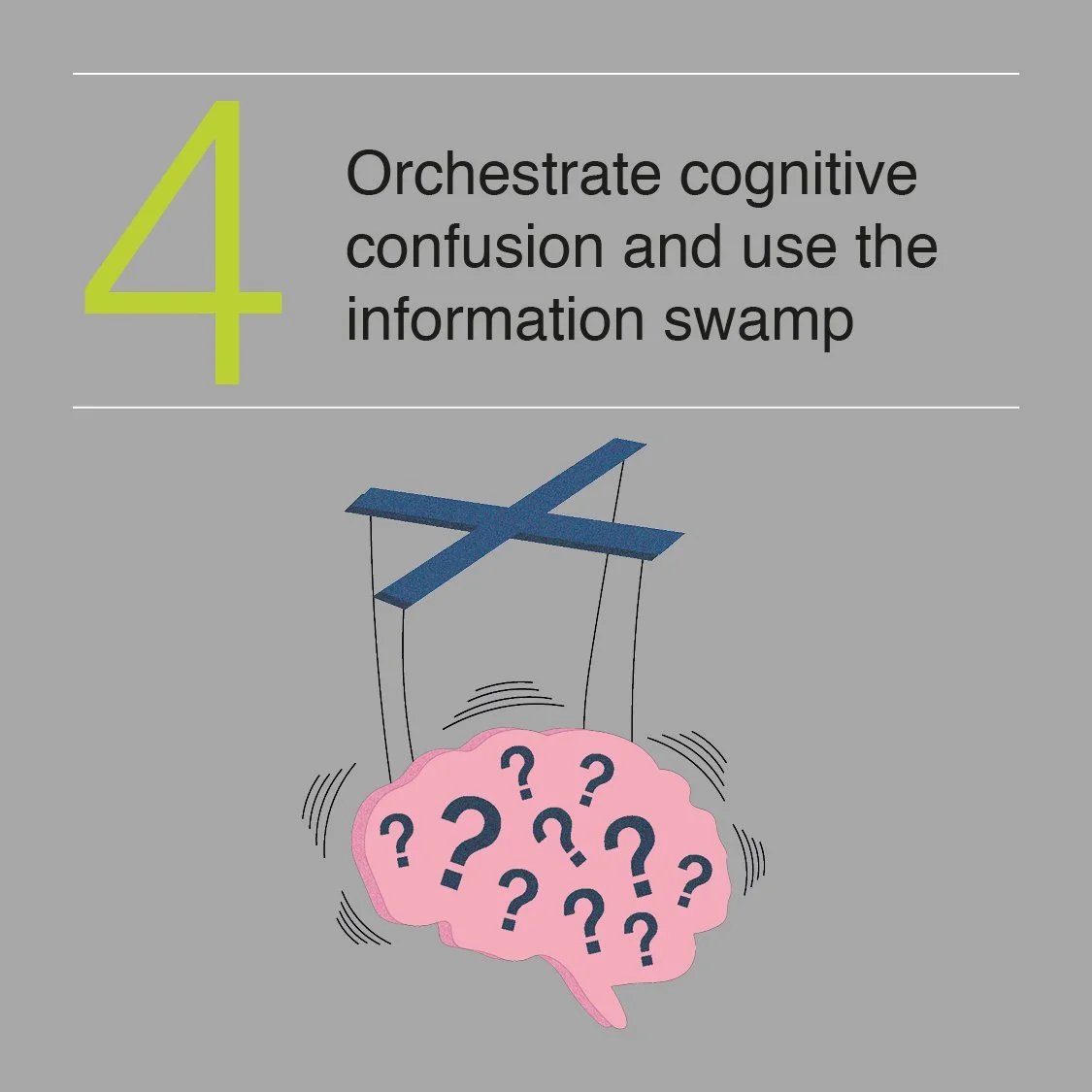
4. Orchestrate cognitive confusion and use the information swamp
How We Do It:
We understand that it is harder for others to change the status quo that benefits us if the battle lines remain blurred and confusion prevails. To aid that we discredit environmental groups and scientists. We use the full tool-kit ranging from cyber espionage, to private investigators, and crippling legal threats to silence opposition completely (sometimes, of course, police forces effectively do this work for us). We flood the zone with misinformation to confuse the public and paralyse policymakers
who might want more industry regulation.
Moving with the times we now orchestrate sophisticated cognitive warfare, harnessing generative artificial intelligence and deepfakes to manufacture absolute illusions of public consensus. By deploying computational propaganda and camouflaged lobbying tactics, we muddy the waters of what information can be truly ‘known’ and relied on, and foster deep societal cynicism. As an industry we’ve long been called on to admit our full Scope1, 2 and 3 emissions, well now we fully embrace our unique, inverted take on our Scope 4 emissions – weaponising our potent political influence to delay effective environmental regulations and guarantee our long term profitability whatever the global climate targets happen to be.
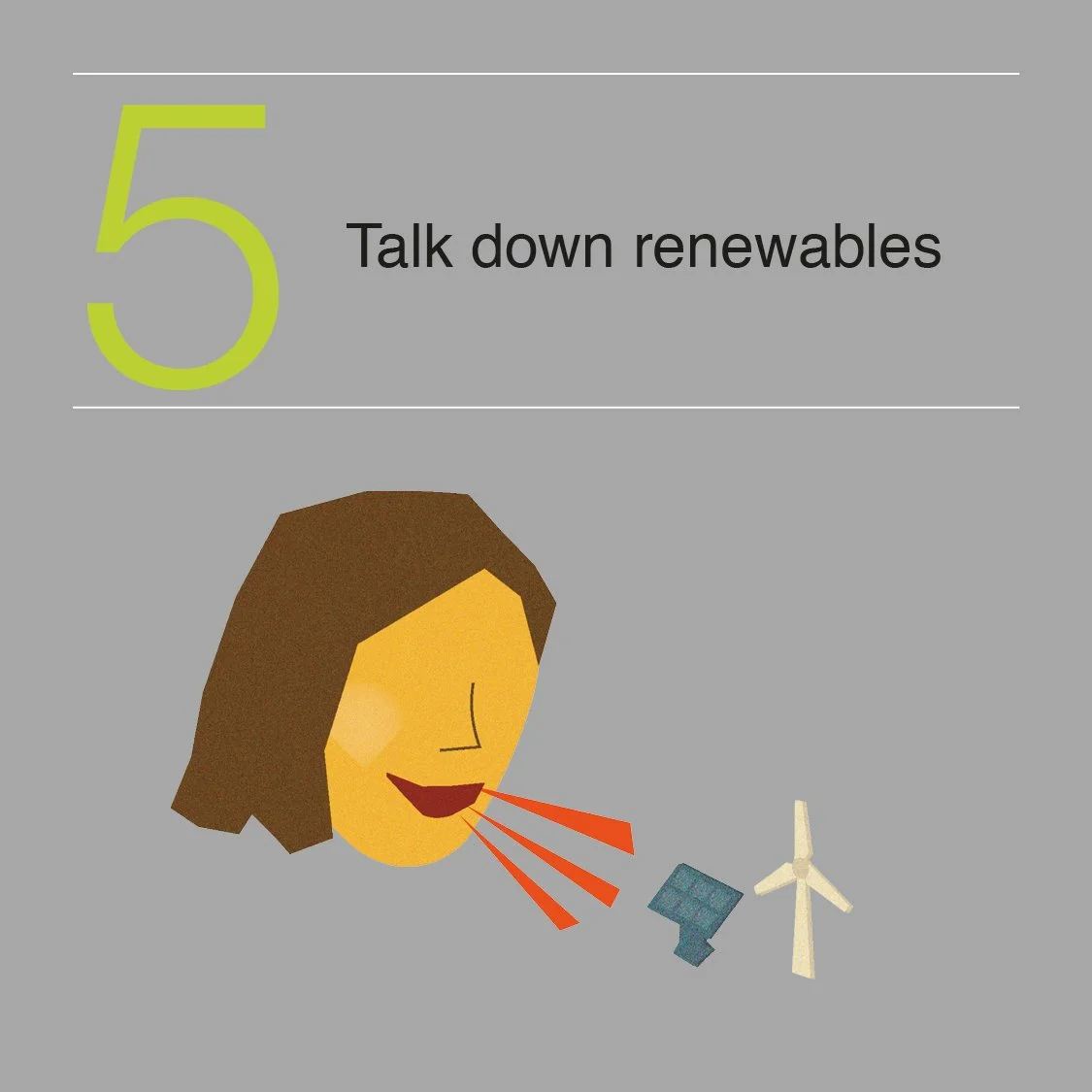
5. Talk down renewables
How We Do It:
We make false claims about the reliability of renewables and do so with great success considering actually how predictable are the sun, wind and tides, and how by season, night and day these energy sources naturally compensate highlight the perceived unreliability of solar and wind energy. We amplify concerns about grid instability while lobbying to prevent action to make grids more welcoming to more stable, decentralised renewable energy sources. And, despite the well-reported great leaps forward in battery technology to store renewable power, we undermine political confidence by talking about the lack of large scale battery storage (fortunately for us it often doesn’t occur to people that storage can easily now be created). Added all together, this has been convincing policymakers that a rapid transition to renewable energy will cause devastating power outages. It’s important not to let politicians dwell on the actual, terrible energy and economic crises caused when our oil and gas dependent economies have supplies interrupted by frequent wars and political instability. And, don’t worry, we even turn times like this to our advantage by arguing we need to dig for even more oil and gas!
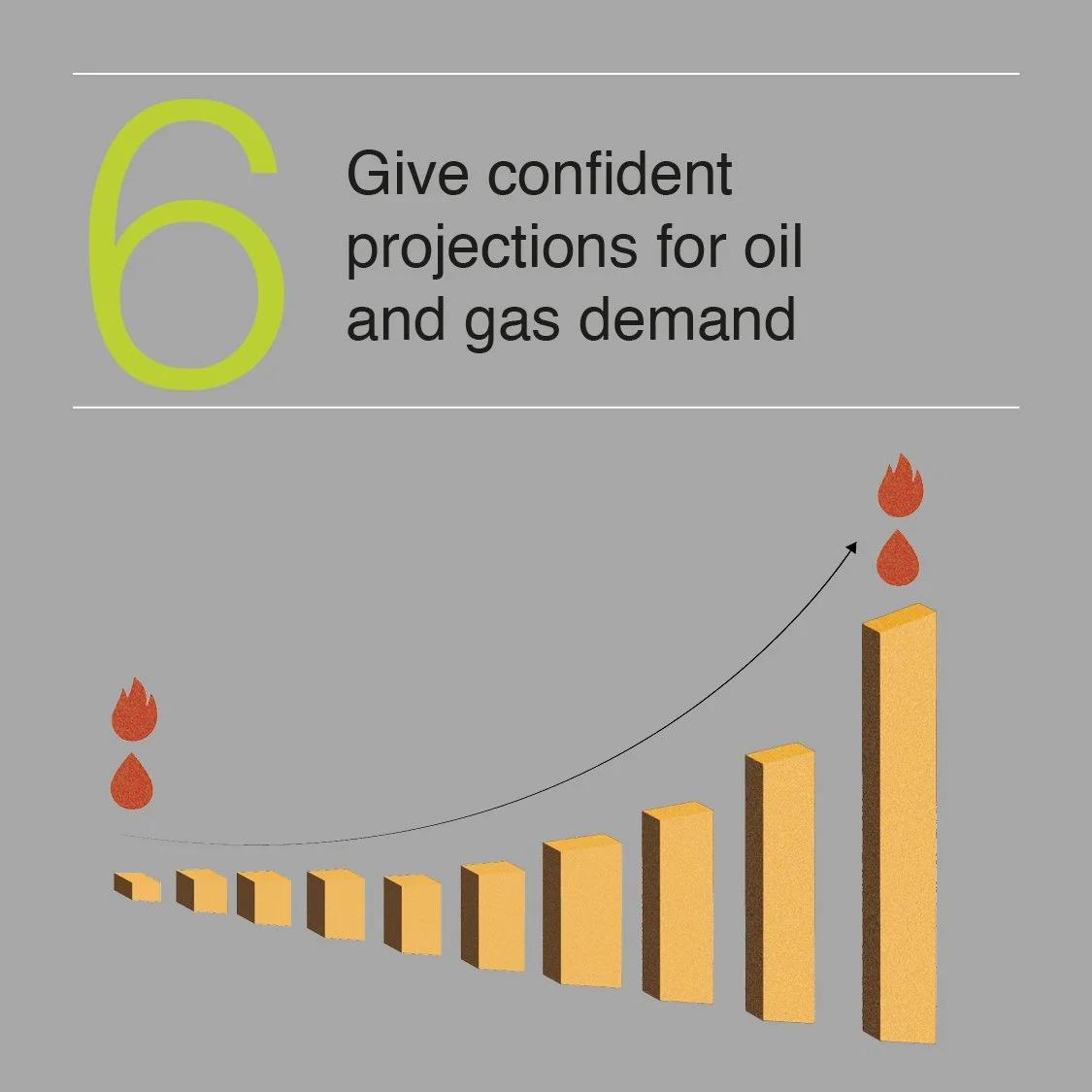
6. Give confident projections for oil and gas demand
How We Do It:
We present the continued use of fossil fuels as an economic certainty. We issue forecasts showing global demand rising for decades, forcing governments to approve new projects simply to keep up with our own projected numbers.
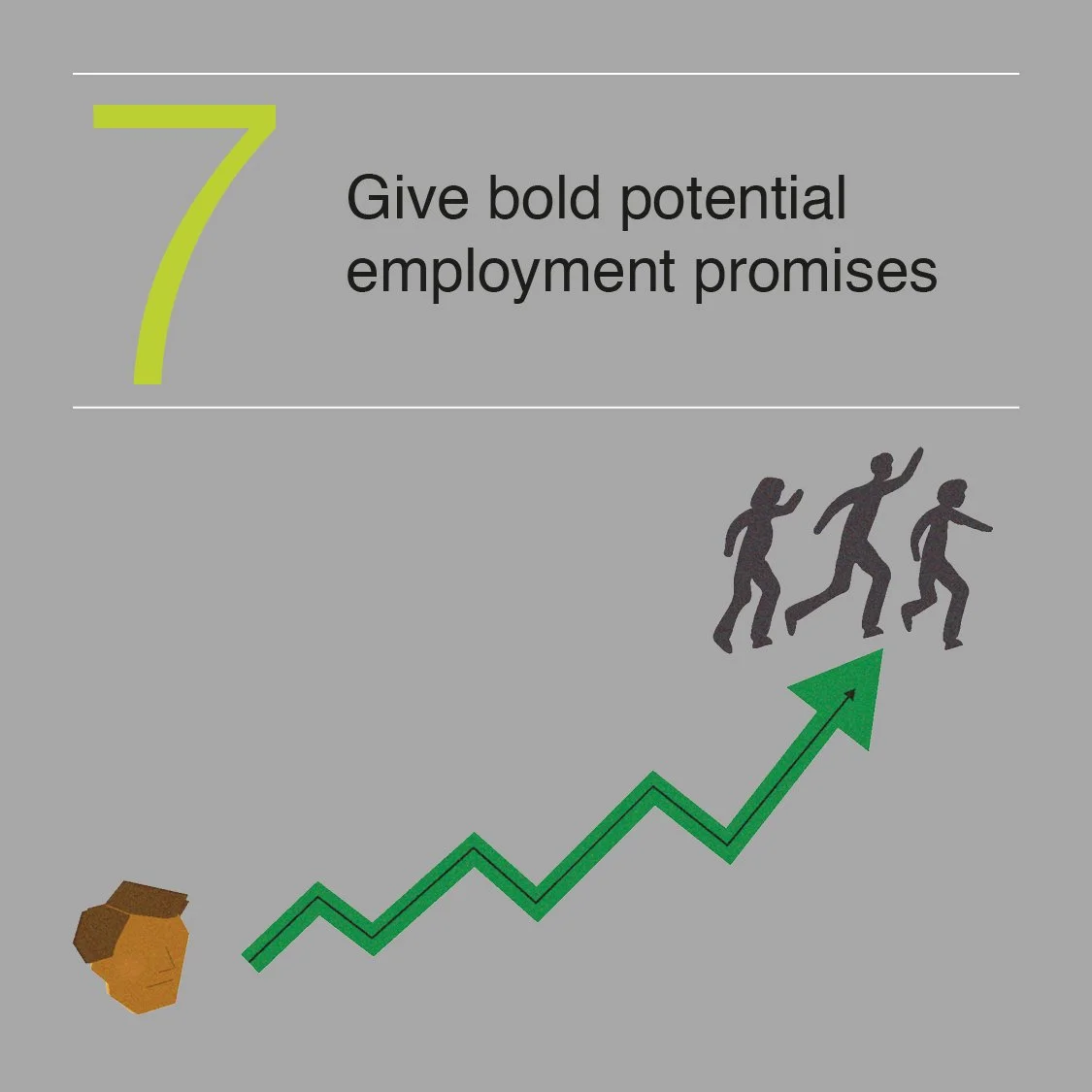
7. Give bold potential employment promises
How We Do It:
We link fossil fuel extraction to job creation. We commission economic studies that inflate the number of jobs our new projects will create, ensuring local politicians view our pipelines and refineries as vital to their communities. By doing this we make sure that decision makers don’t notice that renewable energy creates three times more jobs for every £1 million invested, and that many of these are cleaner and better jobs.

8. Divert focus from industry-wide cost obstacles
How We Do It:
We help the industry mask its massive financial risks and the uncertainties associated with operating. We hide the colossal and rising costs of our proposed projects and have a great track record of shifting the financial burden onto the taxpayer.

9. Deflect the health debate
How We Do It:
We understand that our industry faces a real problem if more people become aware that the air pollution alone from burning fossil fuels kills somewhere between five and over eight million people per year (and of course creates and worsens health problems for many more). And we know that increasingly we’re being dubbed ‘the new tobacco’ because of the health impact of our products. But we have tried and tested ways of managing perceptions on the health issue. Ironically, like tobacco, we sponsor a lot of sports which people associate with health and youth, and that benefit rubs off on us. We also highlight our philanthropic donations to medical causes and remind people that, mostly, we comply with basic environmentallaws in the countries where we operate. Overall we like to project an image of absolute safety.
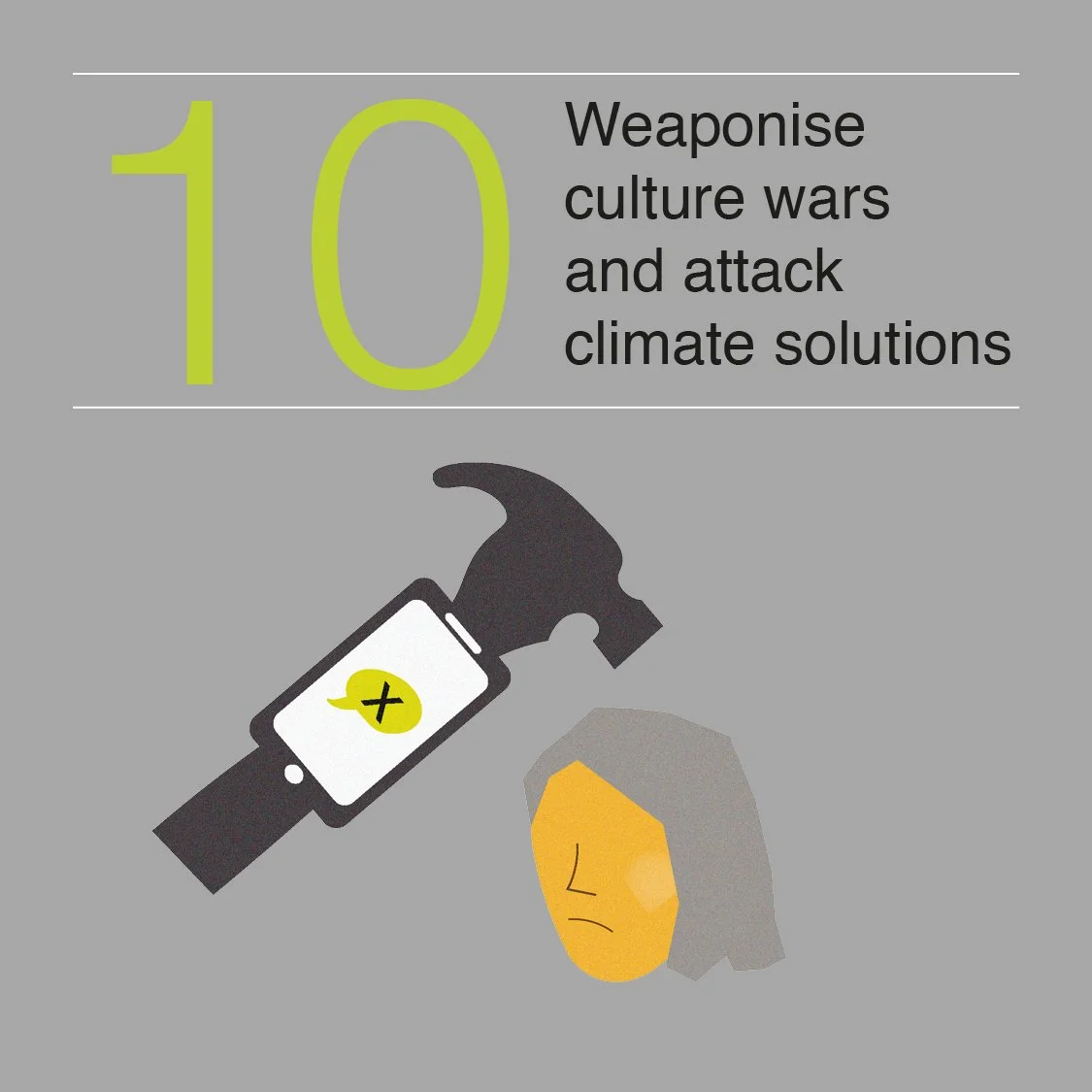
10. Weaponise culture wars and attack climate solutions
How We Do It:
Another problem our industry faces is that people are noticing how quite a lot of wars are caused by the desire to control our products. But we help with that too by quickly shifting attention away to aggressively question the advantages of clean energy, such as energy independence or lower consumer costs. To stop people making the connection between conflict and oil, we completely flip the issue by audaciously saying that renewable energy instead is national security. And when wars for oil push up inflation, again we say that the real inflationary threat comes from renewables (this line is proving harder to maintain as renewable energy costs insist on still falling rapidly).
We intertwine these attacks with rising global right wing movements, rebranding environmental regulations as authoritarian control (again, see what we did there, cleverly flipping the reality). By pivoting to the New Denial and aligning with far right networks, we are able to weaponise culture wars to transform clean energy mandates that build real security and lower costs to all, into highly toxic political liabilities, inciting fierce public outrage to stall international cooperation completely.
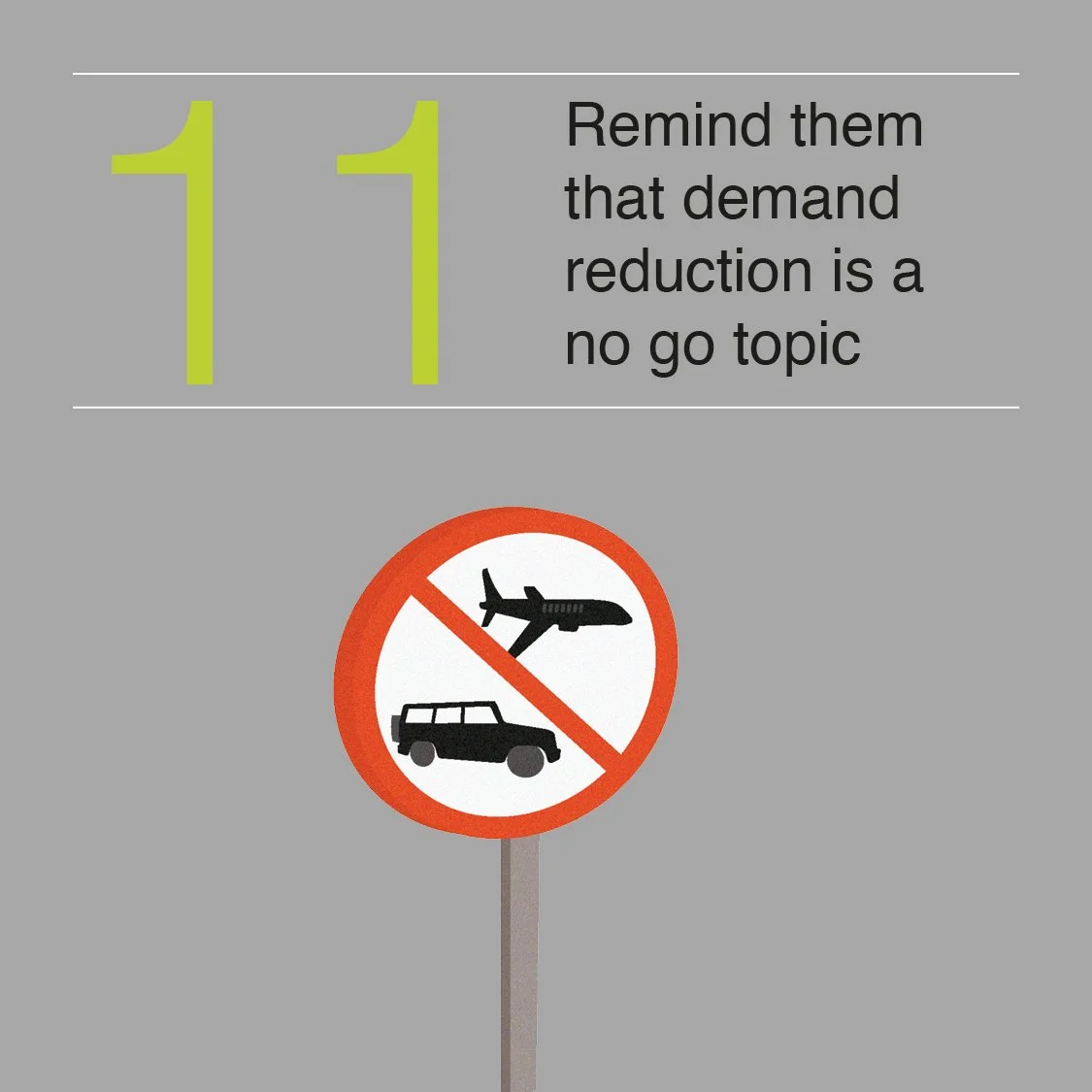
11. Remind them that demand reduction is a no go topic
How We Do It:
We ensure that consuming less energy is never presented as a viable policy option and portray demand as a force of nature that cannot be challenged (and always like to emphasise that demand is rising). That means we can shift the burden of responsibility onto individual consumers to make minor lifestyle changes in response to the unavoidable reality of global heating (some people still notice in spite of our best efforts), thereby absolving our industry from reducing overall production.
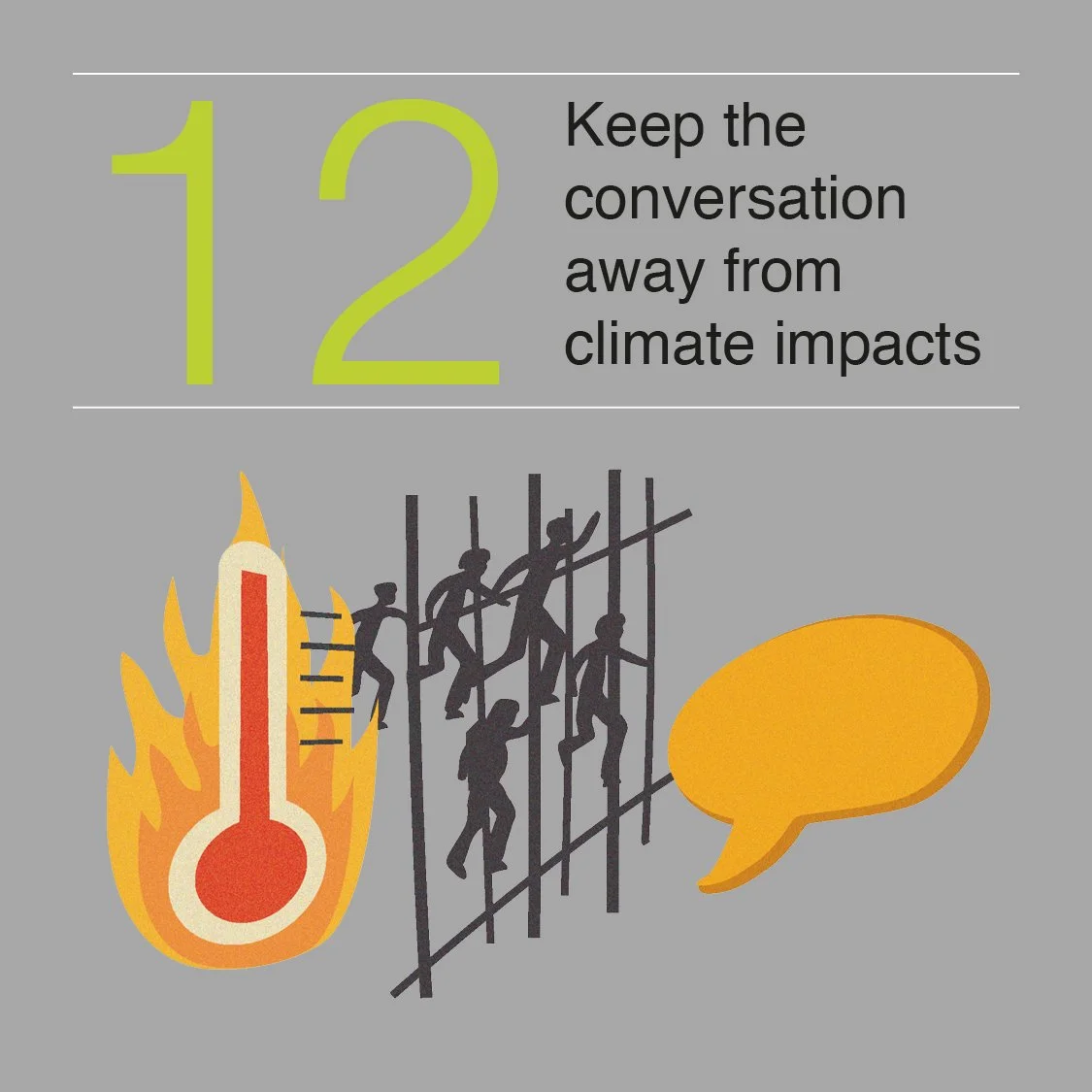
12. Keep the conversation away from climate impacts
How We Do It:
We saturate our public communications with minor local conservation projects. By showcasing small investments in wildlife habitats or local community programmes, we distract the public and policymakers from the devastating global climate impacts of our core business, and the mass extinction event it is helping to fuel.

13. Talk about being part of the solution
How We Do It:
We promote technologies that allow us to continue burning fossil fuels. We lobby for subsidies for carbon capture, utilisation, and storage. We position these technologies as climate solutions to secure billions in public funds, keep us in business and delay the transition to renewable energy.
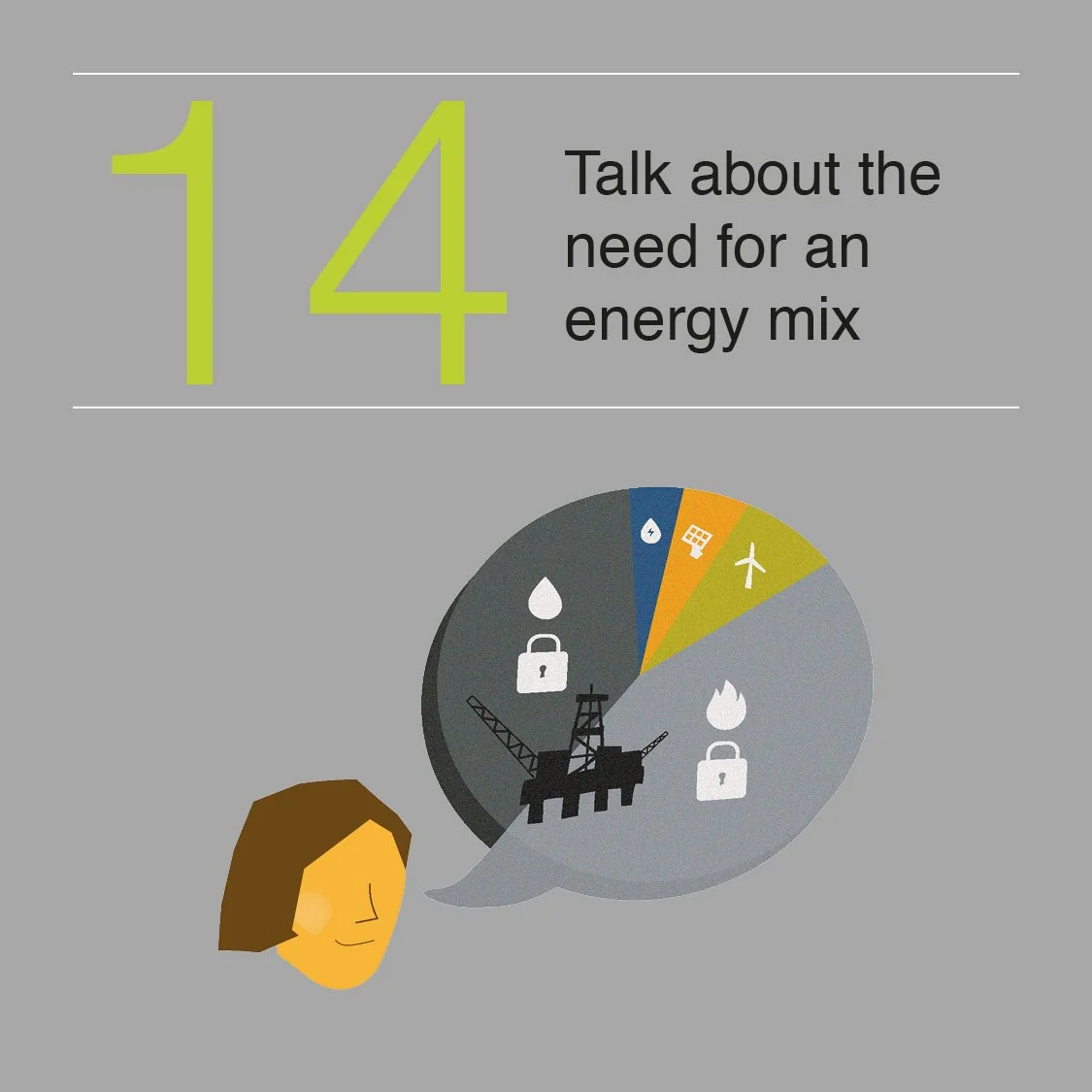
14. Talk about the need for an energy mix
How We Do It:
This is one of our most successful tactics because it sounds so innocent. We deploy the phrase “energy mix” or “all of the above” to guarantee fossil fuels retain a permanent place in the global economy. We promote the idea that renewables are merely a complement to fossil fuels, ensuring gas and oil remain indispensable, never mind that there is a scientific consensus on the need to remove fossil fuels from the energy mix.
15. Exploit sponsorship and philanthropy for influence
How We Do It:
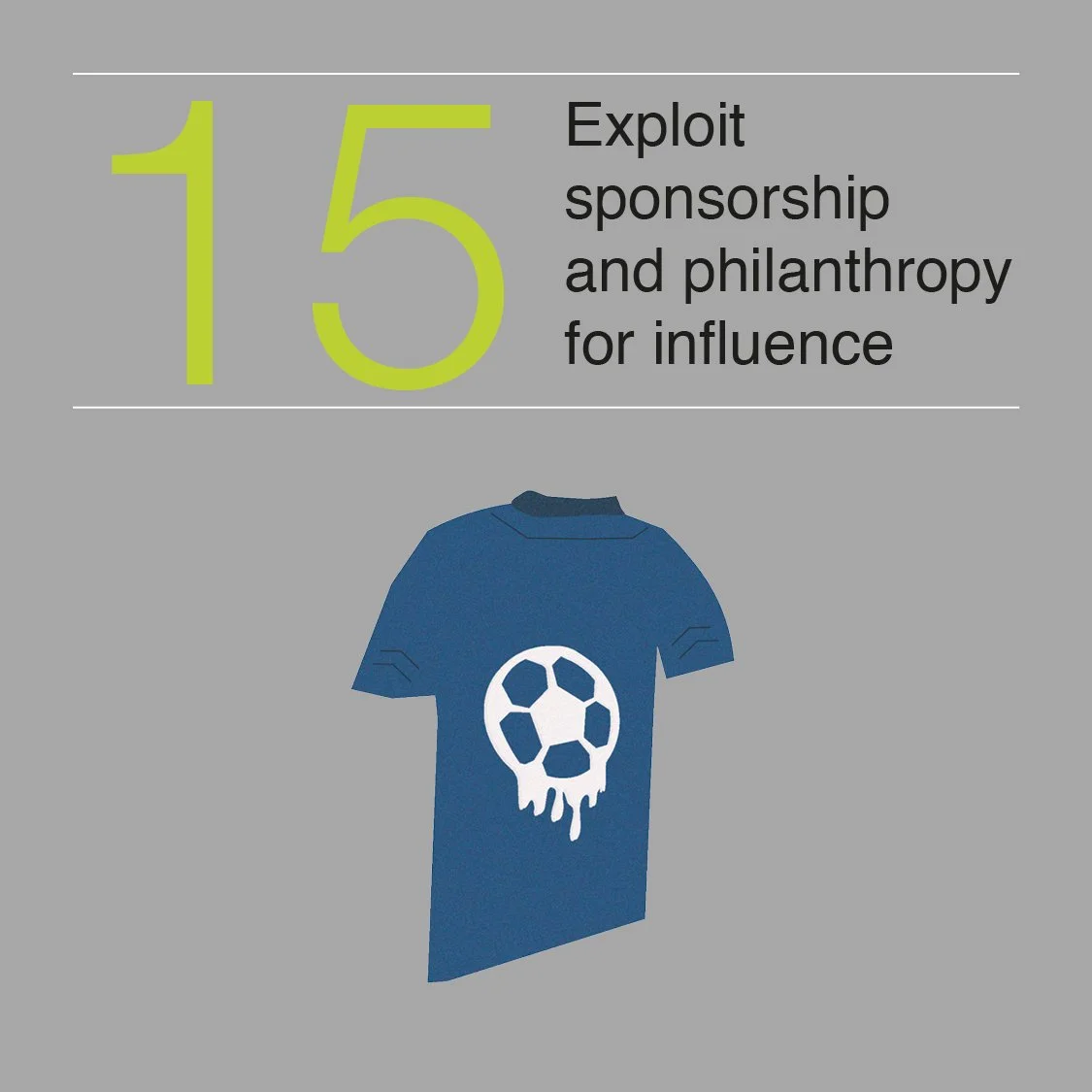
Sponsorship allows us to associate our brands with the things people love. We sponsor major sporting events, art exhibitions, and academic institutions. Our funding buys us immense leverage and access to powerful elites, and guarantees that influential institutions echo our preferred talking points.

16. Cultivate front groups and astroturf
How We Do It:
Obviously, not everyone is going to believe our industry if they hear our message from ourselves. That’s why we use public relations agencies to create advocacy groups that masquerade as grassroots community initiatives. As long as nobody checks too closely, this always looks more plausible and appealing to decision makers and the public. This highly effective tactic creates the illusion of broad public support for our continued expansion, rather than narrow industry lobbying.
17. Capture young minds and fund the right research
How We Do It:
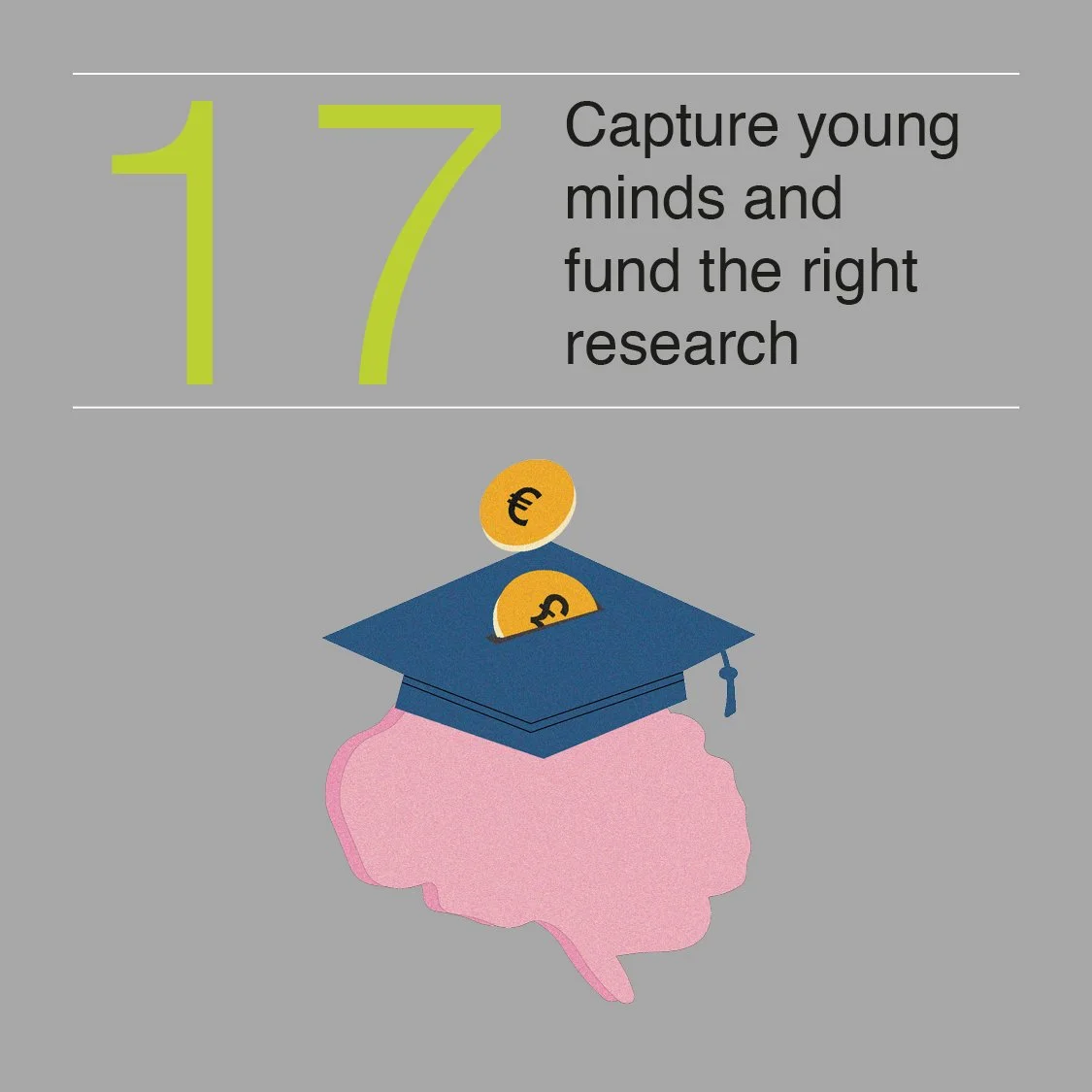
We invest in research that supports our narrative. We fund studies that emphasise the economic risks of rapid decarbonisation and challenge climate science directly. Our funding is structured to appear independent, yet the conclusions perfectly align with our core interests.

18. Control the language
How We Do It:
We rebrand our products to sound benign and shift the public debate away from environmental harm. We use targeted messaging to sway public opinion and justify our continued expansion.
19. Ensure continuous financing
How We Do It:
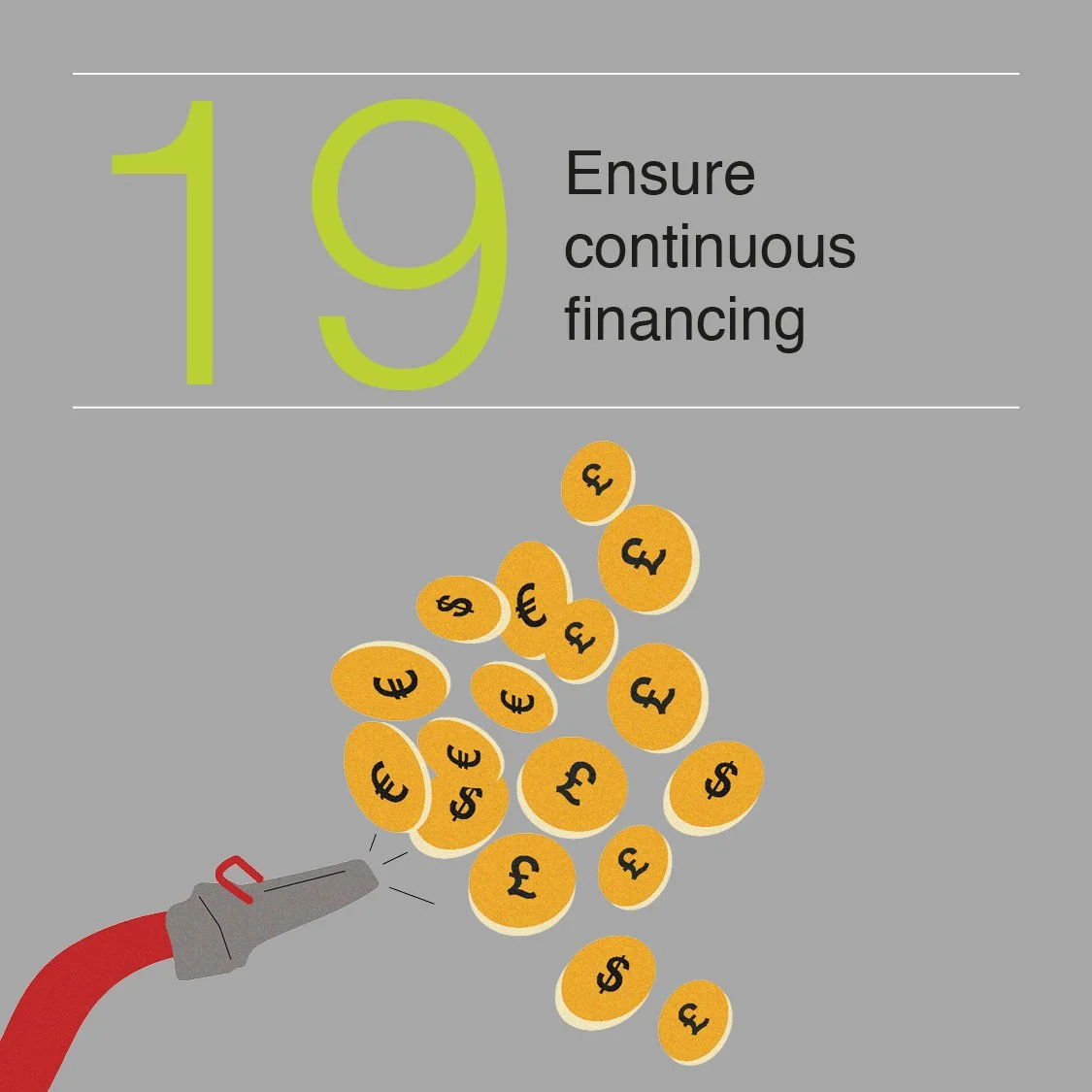
We rely on the global banking sector to fund our expansion. We attack any financial institution or regulatory body that attempts to incorporate environmental risks into its investment strategies, leveraging our political allies to punish banks that restrict fossil fuel lending.
20. Leverage international forums
How We Do It:
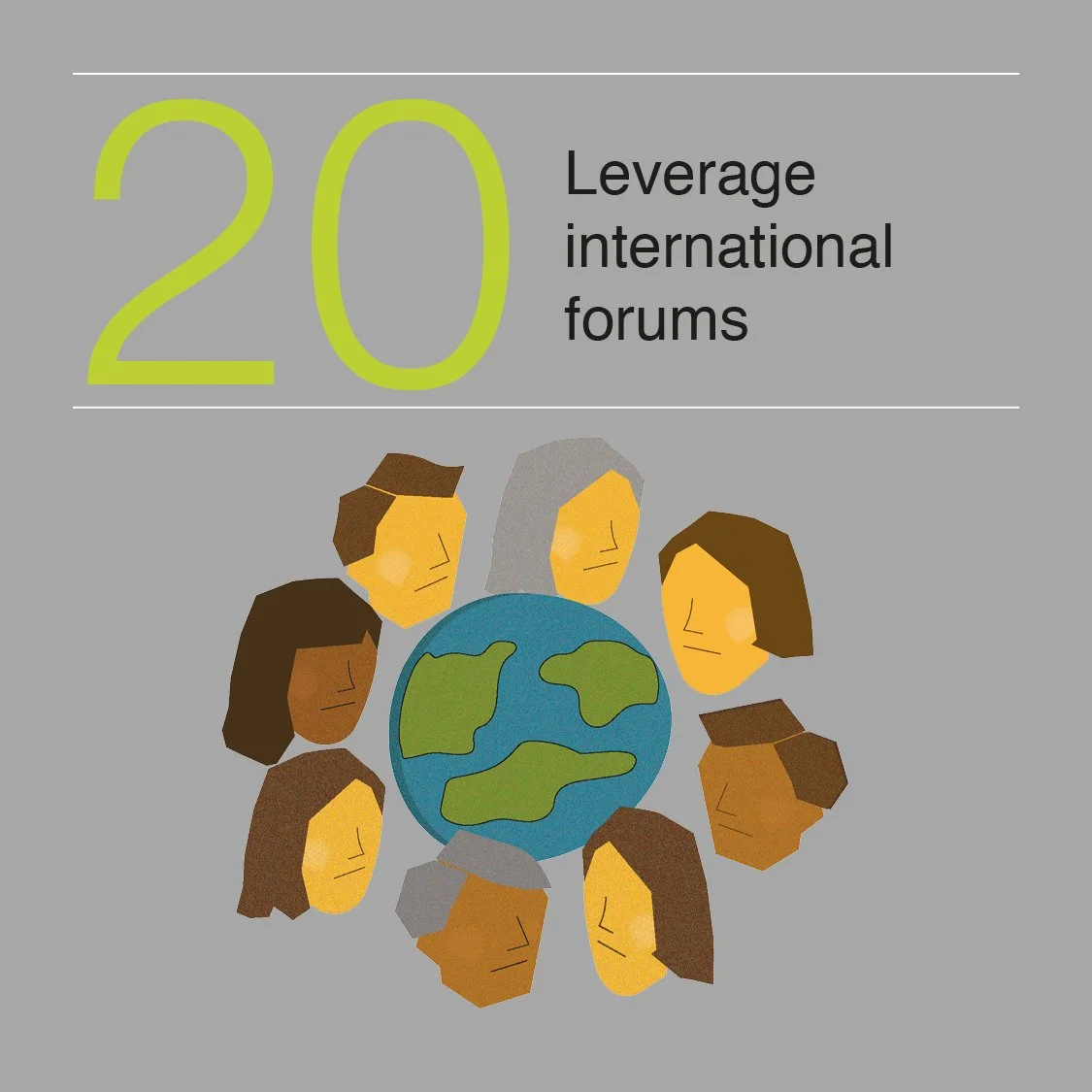
International forums provide us with unparalleled opportunities to shape global climate policy. We ensure our lobbyists are present in massive numbers at United Nations climate summits, typically outnumbering delegations from climate vulnerable nations.

21. Maintain unity and prepare for the long game
How We Do It:
Our industry speaks with one voice. We coordinate our lobbying efforts through powerful industry associations to align our messaging globally. We invest in long term political influence, shaping educational curricula and embedding our dominance in massive energy infrastructure.