
Florence City Council passes fossil ad ban in run up to Winter Games

Photo by Jonathan Körner
As the Milano–Cortina Winter Olympics kick off tomorrow with fireworks, flyovers and forced optimism, the climate contradiction at the heart of the Games has now become impossible to ignore.
This week, Florence became the first city in Italy to ban fossil fuel ads from public space. No oil, gas, or coal billboards. No ‘city break’ airline ads. No SUV propaganda. Just days before the Milano–Cortina Winter Olympics begin, the message could not be clearer - or more awkward - for the organisers.
Because as the world’s cameras point at melting Alpine slopes, Florence City Council has chosen to stop pretending that the companies fueling climate breakdown deserve a free pass.
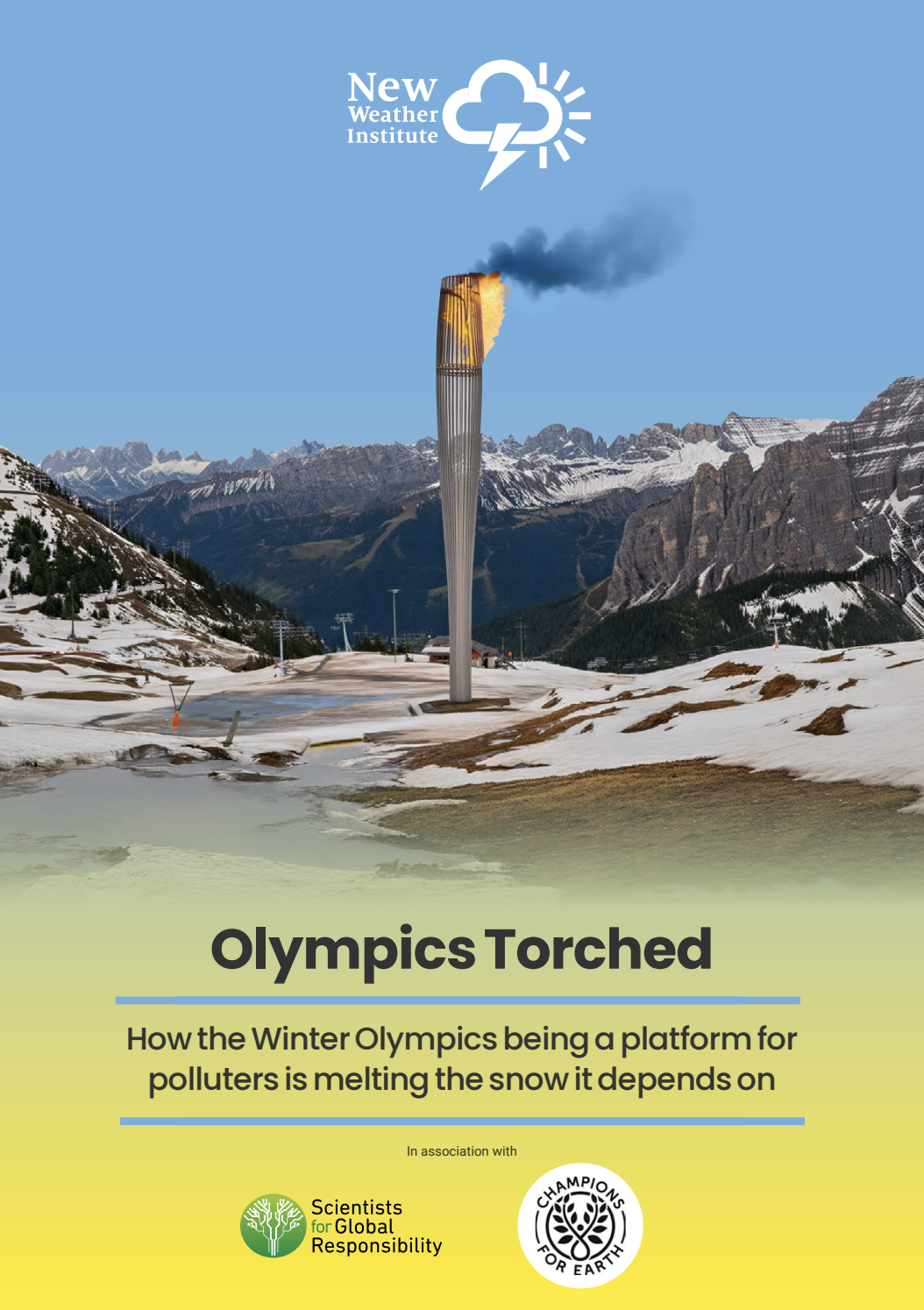
Olympics Torched
The Winter Olympics marks a celebration of our relationship with snow, ice and winter. But Olympics Torched - a new report by the New Weather Institute in association with Scientists for Global Responsibility and Champions for Earth - reveals how the Milano–Cortina Games is undermining its own future. This year, the Games will directly generate around 930,000 tonnes of CO₂e, mostly from spectator travel alone. That emissions load is expected to wipe out 2.3 km² of snow cover and over 14 million tonnes of glacier ice in the years ahead.
And this is before the polluting sponsors of this year’s Games are factored in.
In the report’s analysis how emissions will increase from the promotion of three main sponsors - fossil fuel giant Eni, carmaker Stellantis and ITA Airways - and things get grotesque. Their presence is associated with an additional 1.3 million tonnes of CO₂e. That’s roughly 40% more than the direct emissions of the Games, enough to melt a further 3.2 km² of snow and 20 million tonnes of glacier ice.
By making short-sighted commercial and governance decisions, the Winter Olympics is accelerating the loss of the environment that makes them possible - then letting polluters slap their logos on the wreckage.
Florence’s high-carbon ad ban
But where the Milano Cortina Winter Olympics lags, Florence City Council leads. In a historic decision just two days before the Games’ opening ceremony, Florence has turned a local policy decision into a national statement about polluter advertising in Italy.
In the comprehensive proposal, Florence has banned ads for all fossil fuel-based products and services. This means that companies which sell fossil fuels, internal combustion engine vehicles, travel by cruise or airline, or any other services related to fossil fuel use can no longer use public space to harm public health.
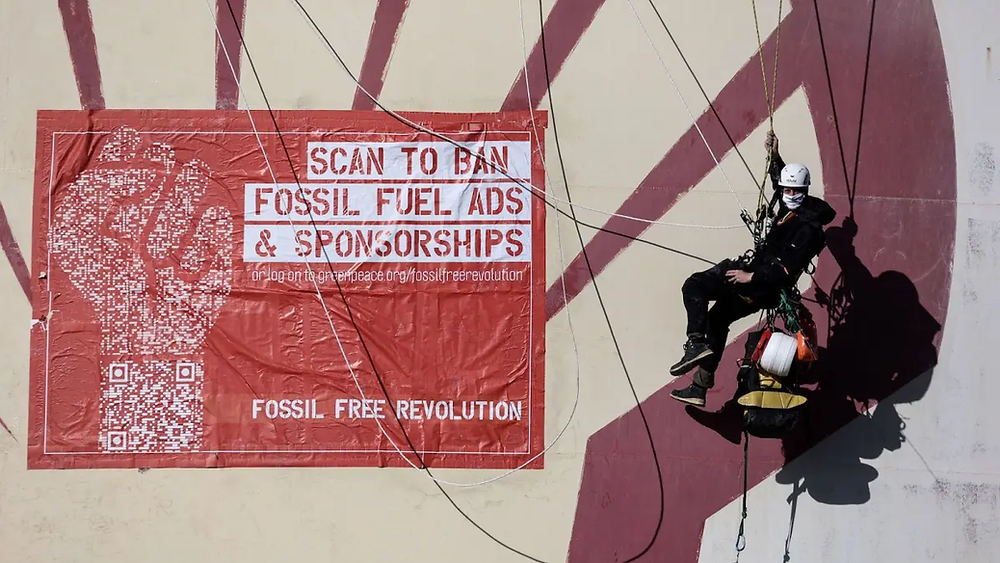
In a one-sided decision, councillors voted 18-3 in favour of the ban with Florence City Councilor Giovanni Graziani explaining the reasoning behind the proposal:
“We do not wish to judge or condemn individual choices, but rather to reduce collective exposure to fossil fuel-based consumption models that harm the environment and health.”
The IOC is still clinging to a governance model that assumes stable winters, endless hosts and unlimited credibility. Yet academics are now warning that by the 2050s, only a handful of locations will even be climate-reliable for the Paralympics.
While the Olympics burn bright for a few weeks, Florence has made a longer-term choice: no more fossil fueled fantasy. No more greenwashed spectacle. No more pretending winter sports can survive while being bankrolled by the industries destroying winter itself.
Athletes, Activists, and Awkward Letters
Beyond Florence’s momentous decision, pressure is building on the International Olympic Committee. New international polling across seven leading winter sports nations reveals overwhelming public concern about the loss of snow and ice, alongside strong support for ending fossil fuel advertising in winter sports. Among winter sports fans, that support is even more pronounced. The findings point to a growing mismatch between the values of audiences and the commercial partnerships underpinning elite winter sport - a disconnect the media has increasingly begun to scrutinise.
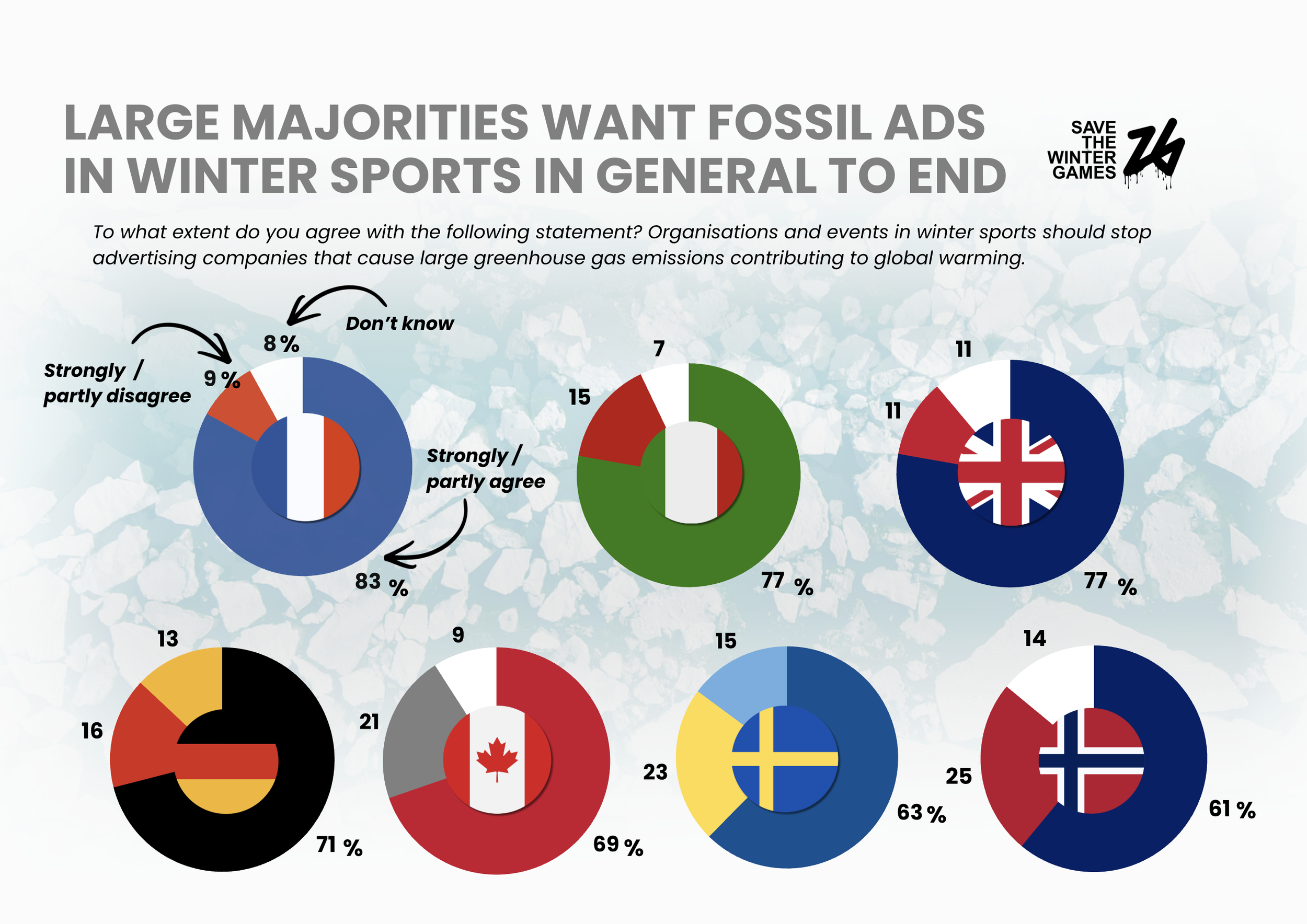
Against this backdrop, a raft of formal challenges has landed on the IOC’s desk. Fossil Free Ski has coordinated a letter from the winter sports community calling out the IOC and its sponsorship partnership with oil giant Eni, warning that fossil sponsorship risks ‘normalising the connection between our sports and the detrimental effects of the product they sell’. The signatories are demanding that the IOC publicly assess whether fossil fuel sponsorship is compatible with winter sport ahead of the 2026/27 season.
Greenpeace International has since escalated the pressure with its own open letter - now signed by around 21,000 people - accusing oil and gas companies of using the Olympic Games of sportswashing . The letter calls on the IOC to drop oil and gas sponsorship from the Winter Olympic and Paralympic Games and to commit to ending fossil fuel sponsorship across all Olympic events. In response, IOC President Kirsty Coventry has acknowledged that the organisation must ‘be better’ on climate.
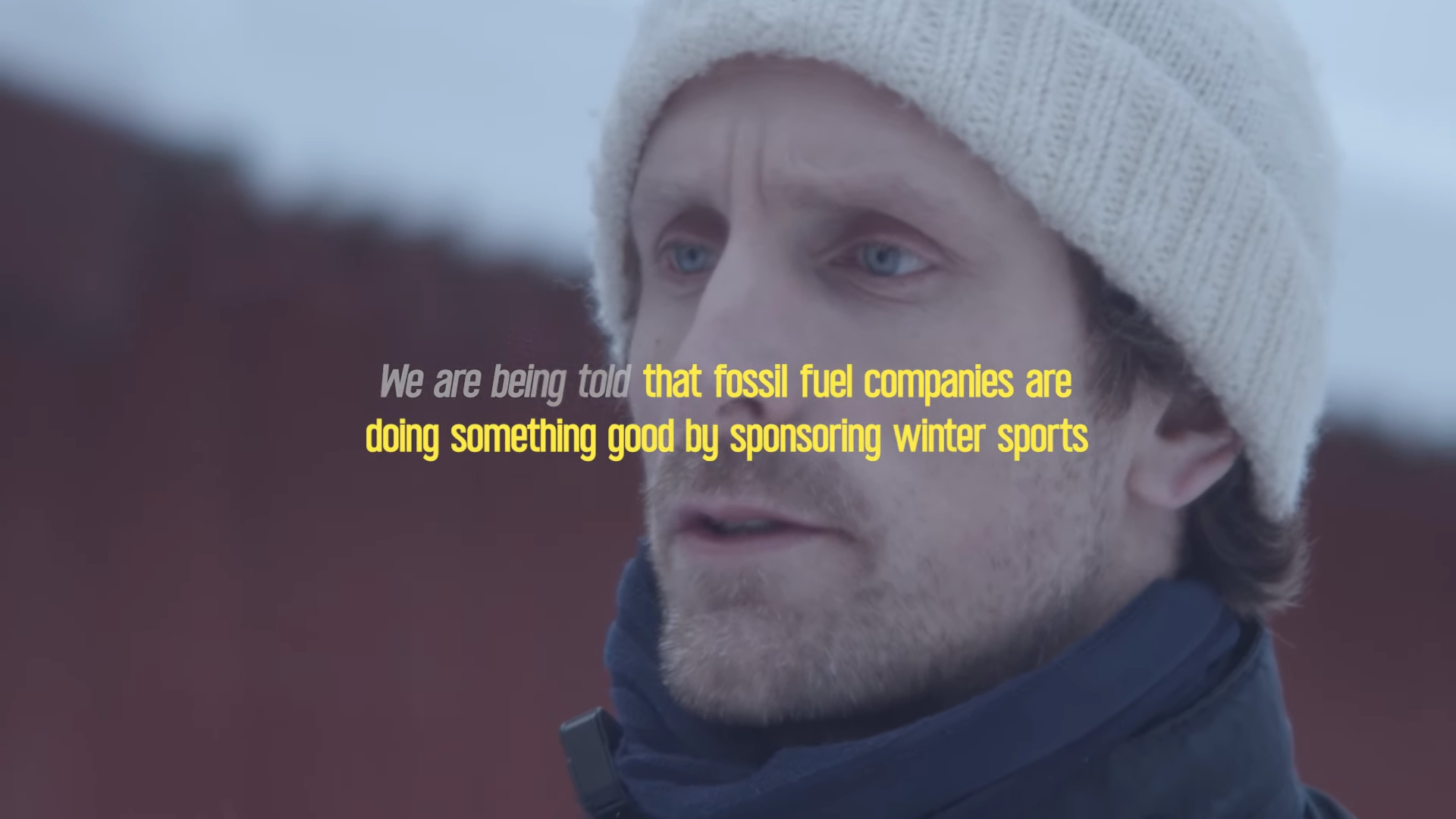
At the same time, a wave of campaign content has helped push the issue firmly into the mainstream. A short film from Save Our Snow centres athletes and families whose lives depend on winter landscapes, underscoring the growing incongruity of polluters sponsoring the Winter Games. Greenpeace’s hard-hitting ‘OILympics’ parody takes a different tone, using satire to underline the same contradiction.
At the centre of the public backlash against the polluting sponsors of this year’s Games is a question of credibility and an escalating reputational risk for the Olympic movement.